Blog

You are here:

China Top 10 Mesh Wire Manufacturers for Global Buyers

Choosing a dependable mesh wire manufacturer requires more than comparing website prices. Global buyers must examine material grades, wire diameter, opening accuracy, welding quality, and production consistency. A 2.5-millimeter galvanized wire may look suitable on paper, yet uneven intersections can weaken an entire panel. Small details matter.

This guide introduces ten leading mesh wire manufacturers serving international markets. The selection considers manufacturing experience, export capability, quality-control systems, customization options, and documentation practices. It also considers practical buyer concerns, including sample approval, packaging, lead times, inspection reports, and communication during production. Stainless steel, galvanized steel, welded mesh, woven mesh, and security applications require different technical judgments. One supplier may excel in corrosion resistance, while another may offer stronger automation or faster custom tooling.

Quality begins before shipment.

W. Edwards Deming, a renowned manufacturing quality expert, stated, “Quality comes not from inspection, but from the improvement of the production process.” His principle remains highly relevant to mesh wire production. Reliable manufacturers control drawing, straightening, cutting, welding, and surface treatment as connected processes. They do not depend only on final inspection.

No ranking is perfect. Buyer requirements differ by climate, load, industry, and destination standards. Some factories present impressive catalogs but provide limited traceability. Others communicate modestly while delivering stable batches for years. This overview therefore encourages verification, not blind trust. Request current certificates, production samples, technical drawings, and clear commercial terms before placing a major order. A careful decision can reduce rework, installation delays, and costly returns.
China Top 10 Mesh Wire Manufacturers for Global Buyers

What Defines a Leading Chinese Mesh Wire Manufacturer

What Defines a Leading Chinese Mesh Wire Manufacturer

A leading Chinese mesh wire manufacturer begins with controlled raw materials.

World Steel Association data shows global crude steel production reached about 1.89 billion tonnes in 2023. That scale makes steel selection critical. Buyers should request mill certificates, chemical composition, tensile strength, and batch traceability before production starts. Reputable factories can connect each mesh roll to a wire-drawing and galvanizing record. Small details matter.

Production consistency separates a supplier from a dependable partner.

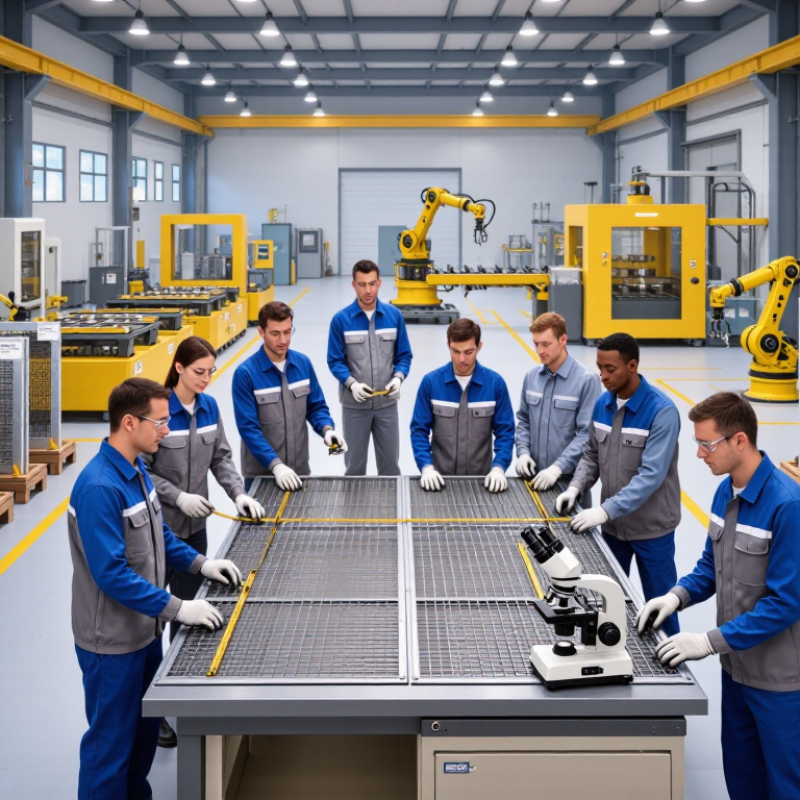
In factory audits, inspectors should examine wire diameter, opening size, weld strength, coating weight, and roll tension. Digital calipers and coating gauges provide practical evidence.

ISO Survey 2022 recorded more than 1.26 million ISO 9001 certificates worldwide, but certification alone proves little. A valid system needs current procedures, trained operators, and corrective-action records. Paperwork can look perfect.

A capable manufacturer also understands export handling.

It should confirm loading limits, moisture protection, labeling, pallet design, and inspection timing. Independent testing can verify results against agreed ASTM, EN, or ISO requirements. Communication matters when drawings change or tolerances become difficult. The best factories explain limits early, not after shipment. Yet no supplier is flawless. Weld drift, uneven coating, and packaging damage still occur. Honest reporting and measurable corrective action reveal more than polished sales language.

China’s Top 10 Mesh Wire Manufacturers by Product Strength

China Top 10 Mesh Wire Manufacturers for Global Buyers

China’s Top 10 Mesh Wire Manufacturers by Product Strength

Product strength should guide any top-ten manufacturer list. The strongest suppliers control wire diameter, aperture size, weld quality, and coating thickness. These factors affect load capacity, service life, and installation accuracy. Grand View Research estimates that the global wire mesh market will maintain steady growth through 2030. Construction, mining, filtration, and agriculture remain important demand sectors. China’s leading manufacturers usually offer welded mesh, woven mesh, expanded metal, and stainless steel solutions. Their practical advantage is production scale, but scale alone proves little.

Tips: Request tensile strength, weld-shear, coating, and aperture-tolerance reports. Ask for samples from different production batches. A polished sample may not represent every shipment.

Product strength also depends on material selection. Stainless steel grades support corrosive environments, while galvanized carbon steel often suits fencing and structural applications. ASTM and ISO testing methods help buyers compare results across factories. Reports from MarketsandMarkets identify infrastructure and industrial filtration as continuing growth areas for metal mesh demand. The best suppliers connect laboratory figures with field performance. They explain testing conditions clearly. Some do not. That weakness deserves attention. A ranking can never be perfect, because delivery control, technical support, and batch consistency change over time. Buyers should review recent certificates, inspection records, and customer-use cases before signing a contract.

China Top 10 Mesh Wire Manufacturers for Global Buyers - China’s Top 10 Mesh Wire Manufacturers by Product Strength

Rank Product Strength Typical Mesh Range Common Wire Diameter Common Materials Surface Options Typical Applications Common International Requirements Buyer Suitability
1 Welded Wire Mesh 6–200 mm openings 0.60–12.00 mm Low-carbon steel, galvanized steel, stainless steel Electro-galvanized, hot-dip galvanized, PVC or PE coated Fencing, animal enclosures, construction reinforcement, storage cages Dimensional tolerance, weld strength, coating weight, corrosion resistance High-volume projects and standard industrial orders
2 Chain Link Fence Mesh 25–100 mm openings 1.80–4.00 mm Galvanized steel, PVC-coated steel Galvanized, green or black PVC coating Security fencing, sports grounds, highways, agricultural boundaries Mesh opening, tensile strength, coating adhesion, roll length Containerized fencing and distributor stock programs
3 Expanded Metal Mesh Small to large diamond openings 0.50–6.00 mm sheet thickness Mild steel, aluminum, stainless steel Mill finish, galvanized, powder coated, anodized aluminum Walkways, platforms, machine guards, façades, ventilation panels SWD, LWD, strand width, sheet thickness, flatness Architectural and industrial fabrication projects
4 Perforated Metal Mesh Round, square, slot and custom perforations 0.50–8.00 mm sheet thickness Carbon steel, aluminum, stainless steel Plain, galvanized, powder coated, brushed or anodized Acoustic panels, screens, filters, equipment covers, building façades Hole diameter, pitch, open area, sheet flatness, burr control Custom fabrication and architectural orders
5 Stainless Steel Woven Mesh 1–635 mesh 0.020–2.00 mm 304, 316 and 316L stainless steel Plain weave, twill weave, Dutch weave Filtration, food processing, chemical equipment, laboratory screens Aperture, micron rating, material grade, cleanliness and edge quality Precision filtration and corrosion-resistant applications
6 Crimped Woven Wire Mesh 1–100 mm openings 1.00–12.00 mm High-carbon steel, spring steel, stainless steel, galvanized wire Plain, pre-galvanized, stainless or powder coated Mining screens, aggregate sizing, quarrying, vibrating screens Opening accuracy, tensile strength, wear resistance, crimp consistency Heavy-duty screening and abrasive-material handling
7 Barbed Wire Standard two-wire and four-point configurations Typically 1.60–2.50 mm line wire Galvanized steel, zinc-aluminum coated steel, PVC-coated steel Electro-galvanized, hot-dip galvanized, polymer coated Perimeter security, agricultural fencing, temporary barriers Barb spacing, line-wire diameter, tensile strength, zinc coating Cost-sensitive security and agricultural projects
8 Hexagonal Wire Netting 13–80 mm openings 0.40–2.20 mm Galvanized steel, PVC-coated steel, stainless steel Galvanized, PVC coated, heavily galvanized Gabions, slope protection, poultry housing, plaster reinforcement Twist strength, mesh opening, coating mass, roll dimensions Civil engineering, landscaping and agricultural supply chains
9 Razor Wire Concertina coils and straight-line assemblies Core wire commonly 2.50–3.00 mm Galvanized steel, stainless steel Galvanized, stainless steel, polymer-coated variants High-security fencing, correctional facilities, restricted sites Blade profile, coil diameter, tensile strength, corrosion resistance High-security installations requiring controlled access
10 Fiberglass and Polymer Mesh 1–20 mm openings Commonly specified by fabric weight and mesh count Alkali-resistant fiberglass, polyester, polypropylene PVC coated, acrylic coated, alkali-resistant treatment EIFS reinforcement, plastering, insect screens, filtration and packaging Mesh count, fabric weight, tensile strength, alkali resistance Lightweight construction and non-metallic mesh applications

Note: The specifications shown are commonly available industry ranges for Chinese mesh-wire production. Final dimensions, materials, coatings, packaging and compliance documents should be confirmed against the buyer’s purchase specification.

Key Products, Materials, and Manufacturing Capabilities

China Top 10 Mesh Wire Manufacturers for Global Buyers

China’s leading ten mesh wire manufacturers serve construction, filtration, agriculture, mining, and industrial fabrication markets. Their key products include welded wire mesh, woven mesh, expanded metal, perforated sheets, and conveyor mesh. Common materials are low-carbon steel, galvanized steel, stainless steel, aluminum, and PVC-coated wire.

Manufacturing capabilities differ considerably. Experienced factories draw wire in-house, control diameter tolerances, and use automated welding lines for consistent openings. Woven mesh producers typically offer square, Dutch, and twill patterns, with aperture sizes measured precisely.

Some facilities add hot-dip galvanizing, electro-galvanizing, powder coating, cutting, bending, and panel framing. Stainless steel grades such as 304 and 316 support demanding applications, though material certificates should be checked carefully.

Reliable suppliers usually provide samples, mill test reports, production photographs, and inspection records. Buyers should confirm wire diameter, mesh opening, roll length, edge treatment, and packaging before placing an order. A small sample can reveal uneven welds, rough edges, or coating gaps.

This step sounds basic. It prevents costly surprises.

Not every large factory delivers equal quality. Some rely heavily on subcontractors, which can weaken traceability and lead-time control. Factory audits, third-party inspections, and clear acceptance standards remain valuable.

Even experienced buyers sometimes overlook packaging strength during long-distance shipping. That mistake deserves attention.

Quality Standards, Certifications, and Export Experience

China’s top mesh wire manufacturers should be judged by evidence, not catalog size.
ISO’s 2022 Survey recorded over 1.26 million ISO 9001 certificates worldwide. However, certification alone does not guarantee consistent mesh strength. Buyers should request current certificates, audit scopes, and traceability records for every production site.

Quality checks should match the final application. Relevant references may include ASTM A1064 for welded wire reinforcement or EN 10223 for fencing products. Ask for wire diameter records, tensile results, weld-shear tests, coating thickness, and dimensional reports.

Export experience also matters. UN Comtrade data shows China remains a major global exporter of steel and wire products, but shipment volume cannot replace technical control. Reliable suppliers provide sample approvals, clear HS-code information, seaworthy packaging, and inspection documents before loading. Small details matter.

Tips:

Compare three recent batch reports. Verify certificates with the issuing body. Request photos of labels and pallets. Check whether the factory can explain salt-spray results in practical terms. A supplier that answers vaguely deserves a second review. Buyers should also inspect rejected samples, not only perfect ones. This step feels inconvenient, yet it exposes weak welding, uneven galvanizing, or inaccurate apertures. Export records should include destination markets, product specifications, and complaint-handling procedures, while recognizing that past performance is useful evidence, not a permanent guarantee.

How Global Buyers Can Compare and Select a Supplier

China Top 10 Mesh Wire Manufacturers for Global Buyers

Global buyers should compare suppliers with measurable evidence, not attractive catalogs. The World Steel Association reported about 1.89 billion tonnes of crude steel production in 2023. This scale creates many options, but steel volume does not prove mesh consistency. Request mill certificates, wire diameter records, aperture measurements, and coating reports for each production batch. A practical comparison should include tensile strength, weld quality, zinc coating mass, tolerance control, monthly capacity, and export experience.

Ask every shortlisted manufacturer for identical samples. Measure the opening with a calibrated gauge. Check whether welded joints remain firm after bending and transport simulation. The International Trade Centre recommends using trade data to assess export capability and market reliability. Buyers can compare shipment history, destination markets, and customs classifications before signing a contract. Also review production lead time, packaging details, inspection access, and payment risk. Clear evidence matters more than a low quotation.

ISO 9001 certification can support process control, but it is not a guarantee of perfect mesh. I would still request recent third-party test reports. A factory may pass an audit and deliver inconsistent batches later. That uncomfortable possibility deserves attention. Compare at least three quotations using the same specifications, Incoterms, inspection rules, and replacement terms. Keep one approved sample beside the incoming cargo. It is simple, physical, and often more reliable than promises.

Go to Top