
A Corrugated Suction Hose transfers liquids, slurries, and some lightweight solids under suction or low-pressure discharge. Its corrugated wall bends around pumps, tanks, and uneven ground. The internal helix helps resist collapse when negative pressure develops. That flexibility explains its popularity in agriculture, construction, drainage, and industrial fluid handling.
Grand View Research’s Industrial Hose Market report identifies agriculture, construction, and manufacturing as major demand sectors. FAO’s 2023 State of Food and Agriculture also highlights irrigation efficiency as a continuing global priority. These trends increase the need for dependable hoses around pumps and water systems. A farm operator may connect this hose to a transfer pump, moving water from a storage pond. A contractor may use it for muddy drainage after heavy rain. In a factory, it can handle compatible chemicals or process liquids, subject to material approval.
Application matters greatly. The hose must match the fluid, temperature, suction pressure, bend radius, and connection size. A hose that survives water may fail quickly with abrasive slurry or oil. Small cracks can appear between corrugations. They are easy to miss.
That assumption deserves challenge.
The U.S. Occupational Safety and Health Administration stresses proper inspection and maintenance of flexible hoses and couplings. Industry standards, including ISO 1307, support consistent hose dimensions and testing practices. However, standards do not replace site-specific engineering. Always verify the manufacturer’s chemical-resistance chart and vacuum rating. Selecting by appearance alone is an avoidable mistake. This guide explains what a Corrugated Suction Hose is used for, where it performs well, and where another hose design may be safer.
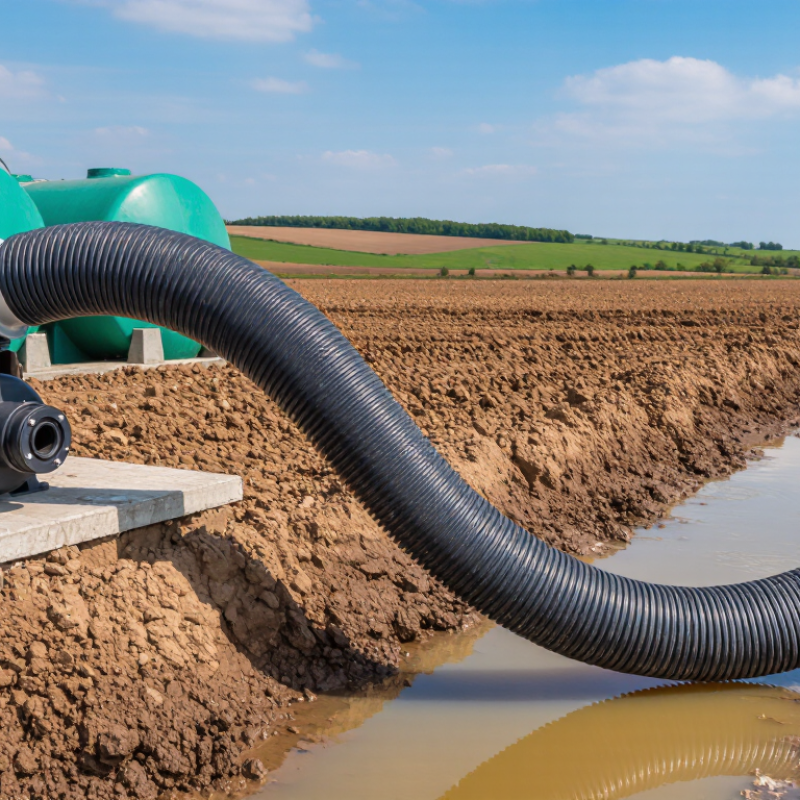
A corrugated suction hose is a flexible tube designed to move liquids, slurries, or light bulk materials under suction. Its outer wall has repeating ridges, called corrugations. These ridges help the hose bend around pumps, tanks, and uneven ground without collapsing easily. Many suction hoses also contain a rigid spiral reinforcement. This support helps the hose resist vacuum pressure during operation.
The hose body may use PVC, rubber, polyurethane, or another compatible material. The correct choice depends on the fluid, temperature, abrasion level, and working pressure. For example, a construction site may use it to draw muddy water from a pit. An agricultural system may transfer irrigation water from a storage tank. Some versions handle abrasive particles, but not every corrugated hose can do so safely.
In practical use, the hose must match the pump’s suction requirements. A narrow hose can reduce flow and increase strain on the pump. Excessive bending can also restrict liquid movement. Keep it short when possible. Inspect the ridges, fittings, and reinforcement before each shift. Cracks may appear inside first, where they are easy to miss. A hose can look strong and still fail under vacuum. That is an important lesson from routine maintenance. Compatibility charts should guide chemical service, because visual inspection alone is not enough.
A corrugated suction hose moves liquids, slurries, or light bulk materials toward a pump. Its corrugated wall bends easily without collapsing under vacuum. Reinforcement, often a spiral wire or textile layer, supports the hose during suction. The pump creates lower pressure inside the hose. Atmospheric pressure then pushes fluid into the hose and toward the pump inlet. That pressure difference drives the flow.
The corrugations improve flexibility, but they also increase turbulence and friction. Hydraulic Institute guidance recommends keeping pump suction velocity near 5 feet per second, or 1.5 meters per second, when practical. Higher velocity can increase pressure loss and cavitation risk. A 2024 MarketsandMarkets report forecasts the industrial hose market to grow steadily through 2029, reflecting wider use in agriculture, construction, mining, and process handling. The number sounds encouraging, but market growth does not guarantee correct hose selection.
Operators should match the hose diameter, vacuum rating, temperature range, and chemical compatibility to the application. A larger diameter usually reduces suction losses, while excessive length makes the pump work harder. Sharp bends can flatten the corrugations. That detail is easy to miss. Inspect the hose for exposed reinforcement, soft spots, and damaged couplings before operation. In real installations, a hose may perform well at first, then lose suction after a small internal collapse. That possibility deserves attention.
What Is a Corrugated Suction Hose Used For?
A corrugated suction hose transfers water, wastewater, sludge, slurry, and irrigation fluids. Its flexible, ribbed wall bends around pumps, tanks, and uneven ground. Many models use PVC with a reinforcing spiral. Others use polyurethane or rubber for better abrasion and temperature resistance. Material choice matters more than appearance.
The U.S. EPA’s 2023 Clean Watersheds Needs Survey estimates $630.1 billion in American wastewater infrastructure needs over 20 years. That pressure increases demand for dependable suction equipment. FAO AQUASTAT reports that agriculture accounts for about 70% of global freshwater withdrawals. Irrigation hoses therefore face frequent movement, sediment, and outdoor exposure. Suitable hoses can handle clean water, treated wastewater, light sludge, and some mild chemicals. However, chemical compatibility depends on concentration, temperature, and hose lining. Strong solvents, hot fluids, or sharp solids may damage standard PVC. A common mistake is assuming every corrugated hose performs the same. It does not.
Tips: Check the fluid chart before installation. Measure suction pressure, temperature, and particle size. Keep the hose fully supported during pumping. A tighter bend can reduce flow and increase stress. For food, drinking-water, or sensitive applications, require the correct certification. Do not guess. Field experience helps, but incomplete records can still cause failure. Industry guidance, including ISO 8330 terminology and applicable ASTM test methods, should support the selection process.
Corrugated suction hoses are flexible, reinforced hoses designed to transfer liquids, air, and some abrasive materials under suction or low-to-moderate pressure. Common hose constructions include PVC, polyurethane, and rubber.
How to read the chart: A higher rating indicates broader typical suitability for the listed material or fluid. PVC is commonly selected for water, air, and many dilute chemicals; polyurethane offers strong abrasion resistance for slurries and particulate materials; rubber is often chosen for flexible handling of water, air, oils, and some industrial fluids. Actual compatibility depends on concentration, temperature, pressure, hose reinforcement, and the manufacturer’s chemical-resistance data.
What Is a Corrugated Suction Hose Used For?
Where Are Corrugated Suction Hoses Commonly Used?
Corrugated suction hoses are used where pumps must draw water, slurry, or other fluids from open sources. Their flexible walls follow uneven ground around tanks, ponds, drainage channels, and irrigation points. Corrugation improves bending without making the hose completely rigid. However, flexibility does not mean unlimited vacuum resistance.
Agricultural irrigation is one of the largest application areas. FAO AQUASTAT reports that agriculture accounts for about 70% of global freshwater withdrawals. Farms commonly use these hoses to pull water from storage tanks, reservoirs, and temporary field pits. The hose must resist sunlight, soil abrasion, and repeated movement. A poorly supported line can kink at the pump inlet.
Construction sites use corrugated suction hoses for dewatering excavations, foundations, and trenches. They also appear in municipal drainage, wastewater handling, flood response, and industrial liquid transfer. In these settings, operators often choose reinforced designs for abrasive sediment or intermittent vacuum conditions. The U.S. Geological Survey’s water-use reports show how significant public-supply and industrial withdrawals remain, supporting the need for dependable transfer equipment.
Size matters.
So does chemical compatibility. Hose selection should consider fluid temperature, particle size, suction pressure, coupling strength, and discharge distance. Field experience shows that many failures begin with a crushed bend or loose connection, not the hose material itself. That detail is easy to overlook.
| Application Area | How the Hose Is Used | Typical Materials or Media | Why Corrugation Is Useful | Common Operating Considerations |
|---|---|---|---|---|
| Agriculture and Irrigation | Transfers water, liquid fertilizer, and other approved agricultural fluids from tanks, ponds, canals, or pumps. | Water, diluted fertilizers, and selected non-aggressive liquid chemicals. | Improves flexibility when equipment moves across uneven ground and around pumps or tanks. | Chemical compatibility, suction rating, sunlight exposure, and correct coupling selection should be checked. |
| Construction and Mining | Moves water, slurry, and selected abrasive mixtures during dewatering, excavation, and material-handling operations. | Groundwater, muddy water, sand-containing slurry, and mineral particles. | A flexible hose can follow changing worksite layouts while reinforcement helps resist collapse under suction. | Abrasion resistance, vacuum rating, bend radius, impact protection, and hose weight are important. |
| Wastewater and Sewage Handling | Suction and discharge of wastewater, sludge, and liquid waste in treatment and maintenance operations. | Wastewater, sewage, sludge, suspended solids, and approved cleaning fluids. | The corrugated construction supports maneuverability around tanks, channels, and service vehicles. | The inner lining must tolerate the fluid, while smooth-bore or low-friction designs may be preferred where solids could accumulate. |
| Industrial Liquid Transfer | Connects pumps, storage tanks, process equipment, and transfer systems for loading or unloading liquids. | Water-based fluids, oils, fuels, solvents, and process chemicals when specifically approved. | Flexibility helps compensate for equipment movement and reduces strain caused by rigid piping layouts. | The hose material, temperature range, pressure, vacuum level, and static-control requirements must match the service. |
| Food and Beverage Processing | Transfers approved liquid or semi-liquid food products between processing, storage, and filling equipment. | Water, milk-based products, juices, oils, syrups, and other compatible food fluids. | Flexible routing supports frequent equipment changes and cleaning access. | Only hoses designed for hygienic service should be used; cleanability, temperature, and regulatory requirements are essential. |
| Marine and Aquaculture | Pumps seawater, freshwater, bilge water, and other compatible fluids on vessels, docks, and fish-farming systems. | Freshwater, seawater, bilge water, and water containing suspended particles. | Flexibility accommodates vessel movement, confined spaces, and changing connection positions. | Resistance to saltwater, ultraviolet exposure, crushing, and repeated bending should be considered. |
| Vacuum and Material Recovery | Collects liquids, wet debris, powders, or granular materials using industrial vacuum equipment. | Water, dust, wet debris, powders, pellets, and other materials compatible with the hose lining. | Reinforced corrugation helps the hose remain flexible while resisting collapse caused by negative pressure. | Vacuum rating, particle size, abrasion resistance, grounding, and the required bend radius must be verified. |
| Tank Trucks and Mobile Pumping | Provides a flexible connection between a mobile pump, tank truck, storage vessel, or temporary transfer point. | Water, wastewater, oils, fuels, sludge, and other approved liquids. | Allows rapid setup and easier handling than fixed piping during temporary or mobile operations. | Couplings must be secure, the hose must be supported against excessive kinking, and operating limits must not be exceeded. |
| General Maintenance and Emergency Pumping | Used for temporary drainage, flood control, equipment servicing, and transfer tasks where flexible suction is needed. | Clean water, dirty water, light sludge, and other compatible non-hazardous fluids. | Easy deployment, storage, and routing make it suitable for changing work locations. | Inspect for cuts, flattening, exposed reinforcement, worn couplings, and contamination before each use. |
A corrugated suction hose transfers water, chemicals, oils, powders, and liquid slurries under vacuum. Its flexible wall helps absorb movement. Corrugation also improves bending around pumps and tanks. Selection must begin with the medium, temperature, suction pressure, and required flow rate. ISO 1307 specifies hose bore dimensions and tolerances, so the inside diameter should match the equipment connection. A narrow hose can increase friction and reduce pump performance. A hose without enough vacuum resistance may collapse suddenly.
Check the reinforcement material, cover, coupling method, and minimum bend radius. Chemical compatibility charts are useful, but they are not perfect. Concentration, heat, and exposure time can change results. NAHAD hose-assembly guidance stresses recording operating conditions and inspecting assemblies before service. The U.S. Bureau of Labor Statistics reported about 2.6 million nonfatal workplace injuries in private industry during 2023. Poor hose handling can add preventable risks. Never lift a filled hose by its coupling. Do not drag it over sharp concrete.
Tips: Inspect before every shift. Look for flattened corrugations, exposed wire, cuts, soft spots, and leaking couplings. Keep the hose supported near the pump inlet. Avoid tight bends behind valves. After use, flush compatible residues and drain trapped liquid. Store it away from sunlight, ozone, heat, and aggressive chemicals. Record installation dates and inspection findings. Replacement timing should follow condition, not appearance alone. A hose may look clean while its reinforcement is already weakening. That detail is easy to miss.
Contact Us