
Blog

You are here:

What Are the Top Off Road Forklift Types in 2026?

Choosing the right Off Road Forklift in 2026 requires more than comparing lifting capacity and purchase price. Outdoor work sites change quickly. Mud, gravel, slopes, narrow access roads, and uneven ground can challenge even a powerful machine.

This guide examines the leading off-road forklift types used in construction, agriculture, landscaping, warehousing, and equipment rental. Rough-terrain forklifts offer strong traction and high ground clearance for demanding surfaces. Telehandlers provide extended reach, which helps place materials on upper platforms or across obstacles. Compact all-terrain forklifts suit smaller sites where maneuverability matters. Truck-mounted models can travel with delivery vehicles, reducing handling time at remote locations.

Real-world selection depends on more than a brochure. Operators should check the load chart, tire design, turning radius, mast visibility, and attachment compatibility. A machine carrying 4,000 pounds on flat ground may handle far less on a slope. That detail is easy to overlook.

Safety remains central. A trained operator, stable load, and verified surface conditions matter every day. Manufacturer guidance and local workplace requirements should guide final decisions. Rental records and maintenance history also reveal problems that polished specifications cannot show.

No single type wins every application. That assumption can fail. A telehandler may seem versatile, yet its size can restrict access. A compact forklift may fit through a gate, but it may lack needed reach. By comparing practical strengths and limitations, buyers can identify the Off Road Forklift that matches their terrain, workload, and operating habits. Expect some compromise. Good equipment decisions usually involve it.
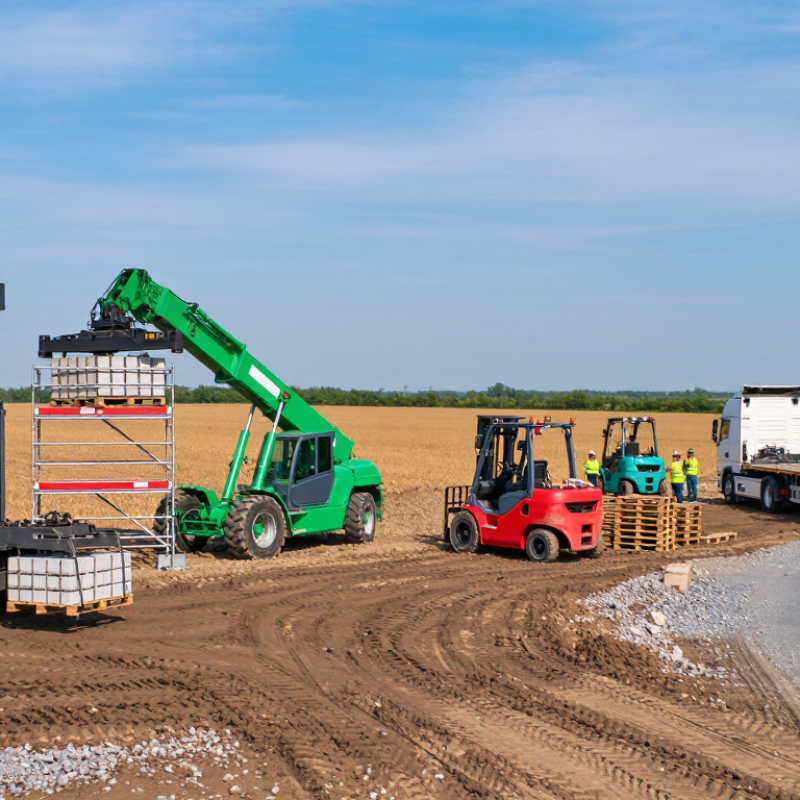
What Are the Top Off Road Forklift Types in 2026?

Off-Road Forklift Categories and Their Core Functions

What Are the Top Off Road Forklift Types in 2026?

Off-road forklifts are grouped by terrain, lifting method, and site demands. Rough-terrain counterbalance forklifts handle uneven ground with wide pneumatic tires. Their high ground clearance helps them cross gravel, mud, and compacted soil. They commonly move pallets, steel bundles, bricks, and timber around outdoor work zones. A reinforced mast provides direct vertical lifting. Visibility still matters near stacked materials.

Telehandlers combine forklift capacity with a telescopic boom. They can place loads beyond the machine’s front axle or onto elevated platforms. Adjustable attachments support lifting, sweeping, bucket work, and material positioning. Stabilizers improve balance during extended reaches. However, capacity decreases as the boom extends. A load chart is not decoration. It should guide every lift.

Compact rough-terrain forklifts suit narrow construction areas, landscaping projects, and agricultural paths. Their smaller frames improve maneuverability beside fences, walls, and temporary structures. Some models use four-wheel steering for tighter turns. All-terrain forklifts offer stronger stability across changing surfaces, but their size may limit access. In practical assessments, a machine can look ideal on paper and still struggle in deep ruts. That detail is easy to miss. Operators should check tire condition, slope limits, attachment compatibility, and braking response before daily use.

What Are the Top Off-Road Forklift Types in 2026?

Off-road forklift categories and their core functions, compared by representative rated lifting capacity.

Rough-terrain forklifts are designed for construction sites and uneven ground, telehandlers combine lifting with extended horizontal reach, truck-mounted forklifts support mobile loading and unloading, and compact all-terrain forklifts provide maneuverability in restricted outdoor areas. The capacity figures show representative midpoints of commonly published specifications and are not brand-specific ratings.

Rough Terrain Forklifts for Unpaved Construction and Agricultural Sites

What Are the Top Off Road Forklift Types in 2026?

Rough Terrain Forklifts for Unpaved Construction and Agricultural Sites

On unpaved construction and agricultural sites, forklift selection starts with ground conditions. Rough terrain forklifts use large pneumatic tires, high ground clearance, and four-wheel drive. These features help them cross gravel, ruts, mud, and compacted soil. A straight-mast rough terrain forklift works well for moving bricks, timber, fertilizer, pipe, and palletized materials. Its forward reach feels predictable near buildings and storage areas. It still needs a stable surface. Deep mud can defeat strong traction.

Telehandlers provide greater reach and attachment flexibility. Operators can place loads over walls, into elevated areas, or across uneven ground. Approved forks, buckets, and other attachments support changing construction or farm tasks. However, every attachment changes capacity and balance. The operator must check the load chart at the actual boom position. Guesswork is costly.

An articulated rough terrain forklift offers a tighter turning radius. That helps in orchards, narrow farm lanes, and crowded construction zones. Compact models can reduce soil damage, but their capacity may limit heavier work. In 2026, buyers should compare ground clearance, axle design, tire pattern, visibility, braking performance, and service access. I have seen machines selected for maximum lift height, then struggle on ordinary slopes. That choice looks efficient on paper, but not in the field. Regular inspections remain essential, especially after muddy shifts.

What Are the Top Off Road Forklift Types in 2026? — Rough Terrain Forklifts for Unpaved Construction and Agricultural Sites

The table compares the main rough-terrain forklift categories used on construction sites, farms, landscape projects, utility work, and other unpaved surfaces.

Forklift Type Typical Rated Capacity Typical Lift Height Terrain and Mobility Primary Applications Main Advantages Key Limitations Best Fit for 2026
Straight-Mast Rough-Terrain Forklift 2,700–8,200 kg
(6,000–18,000 lb)
3–7.5 m
(10–25 ft)
Large pneumatic tires, high ground clearance, and strong traction for packed soil, gravel, mud, and uneven construction surfaces. Lumber, concrete blocks, pipe, roofing materials, and general construction deliveries. High lifting capacity, durable chassis, good visibility, and effective load handling on uneven ground. Less versatile than a telescopic handler; usually requires a relatively open travel path. Heavy construction material handling
Telescopic Handler 2,500–5,500 kg
(5,500–12,000 lb)
6–18 m
(20–60 ft)
Four-wheel drive, high clearance, and stabilizing features support travel across rough or sloped sites. Placing materials at height, loading platforms, farm bale handling, truss work, and site logistics. Combines forklift, crane-like reach, and elevated work capability; attachments can expand its use. Capacity decreases as reach increases; forward load placement requires careful load-chart control. Versatile multi-purpose projects
Articulated Rough-Terrain Forklift 1,800–4,500 kg
(4,000–10,000 lb)
3–6 m
(10–20 ft)
Center articulation improves maneuverability on narrow, irregular, or partly obstructed outdoor work areas. Residential construction, landscaping, building-stone placement, and work in confined outdoor spaces. Small turning radius, strong maneuverability, and the ability to position loads around obstacles. Generally lower capacity and less lateral stability than larger straight-mast machines. Tight residential and landscape sites
Compact Rough-Terrain Forklift 1,300–2,700 kg
(3,000–6,000 lb)
2.5–5 m
(8–16 ft)
Compact frame, pneumatic tires, and four-wheel drive for narrow access routes and uneven ground. Small farms, nurseries, renovation projects, utility maintenance, and residential construction. Easier transport, lower operating footprint, and better access through gates or restricted work zones. Limited lifting height and capacity for heavy structural materials or large palletized loads. Small operators and restricted access
Agricultural Rough-Terrain Forklift 1,800–4,000 kg
(4,000–9,000 lb)
3–7 m
(10–23 ft)
Designed for soil, gravel, field roads, and farmyards; often configured for traction and seasonal outdoor use. Pallets, feed, fertilizer, produce bins, hay-related materials, and agricultural supplies. Good ground clearance, outdoor durability, and compatibility with farming attachments. Performance can be affected by soft soil, steep slopes, wet conditions, and unstable loads. Farms, orchards, and agricultural yards
Rough-Terrain Container and Yard Forklift 4,500–16,000 kg
(10,000–35,000 lb)
3–6 m
(10–20 ft)
Heavy-duty pneumatic tires and reinforced frames support high-load travel over prepared yards and firm unpaved surfaces. Shipping containers, steel products, precast concrete, timber yards, and infrastructure projects. Very high capacity, robust counterweight design, and strong performance in demanding material yards. Large operating radius, high transport weight, and reduced suitability for soft ground or confined sites. High-capacity outdoor yards
Electric Rough-Terrain Forklift 1,500–3,500 kg
(3,300–7,700 lb)
3–6 m
(10–20 ft)
Suitable for firm outdoor surfaces, covered work zones, and low-emission areas; traction depends on tire and drive configuration. Indoor–outdoor construction work, agricultural buildings, municipal projects, and noise-sensitive locations. Low local emissions, reduced noise, and potentially lower routine energy and maintenance requirements. Operating time, charging access, battery weight, and performance in deep mud or severe weather must be evaluated. Low-noise and lower-emission operations

Typical ranges are indicative industry values rather than specifications for a particular machine. Actual capacity, lift height, stability, gradeability, and operating speed depend on the configuration, attachment, load center, tire selection, surface conditions, and applicable safety requirements.

Telehandler Forklifts for High-Reach and Multi-Purpose Material Handling

Telehandler forklifts remain a leading off-road choice for high-reach and multi-purpose material handling in 2026. Their telescopic boom places pallets on upper platforms, roof structures, and distant work areas. Four-wheel steering helps operators move across muddy yards and uneven construction ground. Yet reach alone does not define performance.

A practical selection starts with the load chart, not the maximum lifting height. Operators should check capacity at the required boom angle and outreach. A machine rated for 4,000 kilograms may lift far less when fully extended. Stabilizers can improve control on firm surfaces, while suitable tires support traction on gravel, soil, or sloped terrain. Attachments also matter. Forks, buckets, work platforms, and lifting hooks change both capability and operating limits.

Visibility deserves close attention. Elevated loads can block the forward view, so trained operators must use signals, cameras, and clear travel routes. Regular inspections should include hydraulic hoses, tires, pins, brakes, and attachment locks. Small faults become expensive quickly. One common mistake is choosing a larger telehandler than the site actually needs. It may consume more fuel and reduce maneuverability in narrow spaces. The ideal choice is not always the strongest one. It is the machine that matches reach, load, terrain, and daily workflow with fewer compromises.

Truck-Mounted and All-Terrain Forklifts for Mobile Jobsite Operations

What Are the Top Off Road Forklift Types in 2026?

Truck-mounted and all-terrain forklifts support mobile jobsite operations where standard warehouse machines cannot work safely. A truck-mounted forklift travels with the delivery vehicle and unloads materials without waiting for site equipment. It suits fencing supplies, roofing materials, pipes, and palletized loads. Setup is quick. Space is limited.

All-terrain forklifts offer stronger performance across gravel, mud, slopes, and uneven ground. Their larger tires, higher ground clearance, and stabilizing systems help maintain control outside paved areas. Operators can place loads farther from the machine, which helps when access roads are narrow. However, rough ground still demands slower travel and careful load positioning.

Choosing between these types requires more than comparing lifting capacity. Check the load chart at the intended reach and height. Inspect tire condition, hydraulic lines, forks, and attachment locks before each shift. Confirm that the ground can support the machine, especially near trenches or newly filled soil. A trained operator should read the terrain, not just the dashboard.

The choice is not always obvious. Truck-mounted units save transport time, but they may lack the reach needed for deep sites. All-terrain units handle difficult surfaces, yet their larger footprint can complicate access. Even experienced crews can misjudge a soft shoulder after rain. That mistake is avoidable, but only when site conditions are reviewed honestly.

How to Compare Off-Road Forklift Types for 2026 Applications

Choosing the top off-road forklift type in 2026 depends on the worksite, not popularity.

Rough-terrain forklifts suit uneven ground, gravel, and outdoor material yards. Their large tires and high clearance help maintain stability across broken surfaces. They work well when loads move short distances.

Telehandlers offer greater reach and lifting flexibility. They can place materials on platforms, upper floors, or distant points. However, extended booms change the load balance quickly.

Operators must check load charts at every working height. Compact rough-terrain forklifts fit narrow sites, but they may sacrifice lifting capacity.

Compare each type through real site conditions.

Measure maximum load weight, lift height, travel distance, ground slope, and available turning space. Review visibility from the operator seat. A clear view can reduce delays and prevent avoidable contact with stored materials.

Check attachment compatibility, hydraulic response, tire durability, and cold-start performance. Electric models may suit quieter sites, while diesel units often support longer outdoor shifts. Actual results vary.

Do not judge cost from the purchase price alone. Include fuel or charging, tire replacement, planned servicing, training, and downtime.

In field evaluations, a slightly smaller forklift sometimes performs better because it moves faster through restricted lanes. I have also seen teams overestimate reach needs and pay for unused capacity. That mistake deserves a second look.

Ask operators to test each finalist with representative loads before approval. Review local safety requirements and manufacturer load data carefully.

Go to Top