
Choosing a reliable Led Harness manufacturer is rarely as simple as comparing unit prices. Global buyers must examine conductor quality, connector stability, insulation performance, production consistency, and supplier communication. A harness may look excellent in a sample yet fail after repeated bending, heat exposure, or vibration.
Lighting engineer James R. Benya has often emphasized, “LEDs are not light bulbs; they are electronic devices.” That observation matters here. An Led Harness is not merely a group of wires. It connects sensitive lighting components with power systems, controls, and protective hardware. Small design weaknesses can create flickering, overheating, signal loss, or costly installation delays.
This guide reviews ten manufacturers serving international buyers. The comparison considers manufacturing experience, material traceability, customization ability, quality-control procedures, testing capacity, certifications, and delivery reliability. It also looks at practical details, such as connector locking force, cable flexibility, waterproof sealing, and clear labeling during installation.
Price still matters. But it should not lead every decision.
Some suppliers offer impressive catalogs yet provide limited engineering support. Others communicate well but lack stable production capacity. That distinction is easy to miss. It deserves attention.
The selected companies are not presented as universally perfect. Manufacturing conditions change, and published claims require verification. Buyers should request current samples, inspection records, and realistic production timelines before committing. A careful review can reduce rework, protect project schedules, and support safer LED installations across different markets.
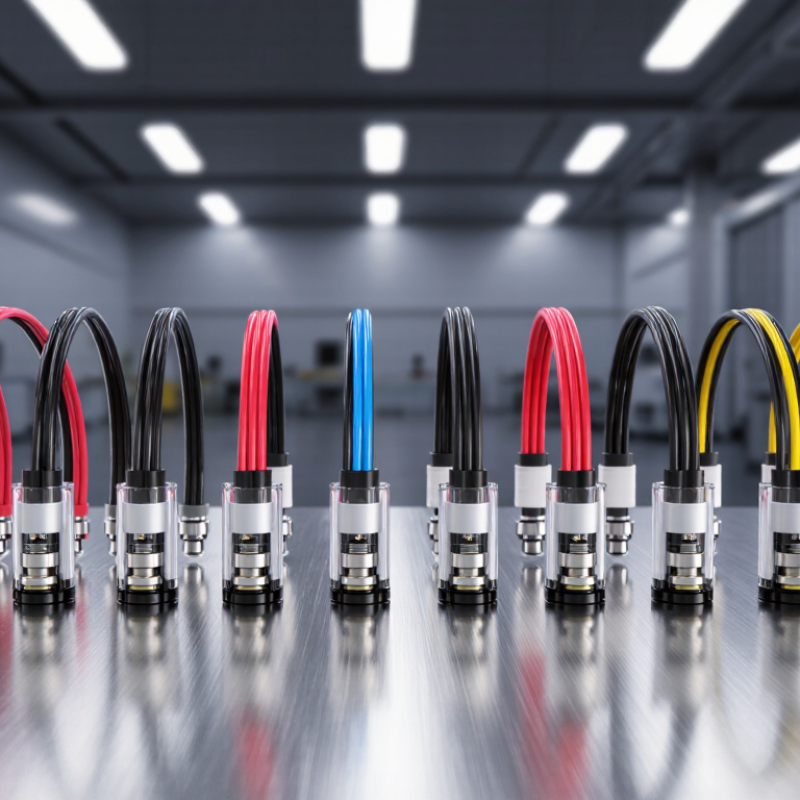
An LED harness is a prepared wiring assembly that connects LED modules with power supplies, controllers, sensors, or switches. It usually includes conductors, terminals, connectors, insulation, and protective sleeving.
Unlike loose wires, a harness supports faster installation and more consistent electrical performance. Applications include vehicle lighting, industrial equipment, commercial signs, architectural lighting, and machinery.
Each environment creates different demands. Heat, vibration, moisture, bending, and limited installation space can affect harness life.
A clean appearance helps, but it does not prove reliability.
Relevant industry standards depend on the application and destination market. Buyers should review conductor size, current capacity, voltage rating, insulation temperature, flame resistance, connector compatibility, and ingress protection.
Automotive projects may require controlled crimp height, terminal retention, continuity testing, and documented traceability.
Industrial systems may need stricter enclosure and cable identification requirements.
Testing should include polarity checks, pull tests, insulation inspection, and heat-cycle evaluation. Requirements can be overlooked when teams focus only on price.
Tips: Request drawings, material specifications, and sample test records before purchasing. Confirm connector locking force and cable bend radius. Ask how each batch is inspected.
A useful supplier should explain limits clearly, not promise universal compatibility. In practice, even experienced buyers sometimes select a connector first and check the environment later.
That approach can create expensive rework. Small details matter.
Keep revision numbers on every harness drawing.
Choosing among LED harness manufacturers requires more than comparing unit prices. The U.S. Department of Energy reports that LED lighting can use at least 75% less energy and last up to 25 times longer than incandescent lighting. That advantage depends on reliable electrical connections. A weak crimp can create heat, voltage drops, or intermittent flicker inside a finished lamp.
Start with manufacturing evidence. Ask for conductor specifications, insulation temperature ratings, crimp-height records, and batch traceability. Request sample test reports for pull strength, bend cycles, salt spray, and thermal aging. A capable supplier should explain its process against IPC/WHMA-A-620 practices and relevant IEC requirements. Look for automatic crimp monitoring, optical inspection, and controlled wire stripping. Photos are useful, but production records matter more.
Capacity also needs careful testing. Confirm monthly output, backup equipment, lead times, and change-control procedures. The International Energy Agency identifies efficient lighting as an important global energy-saving opportunity, increasing pressure for dependable LED systems. However, energy efficiency does not prove harness quality. I would inspect three production batches, not one attractive sample. Small details matter, such as a terminal lock that clicks firmly or a cable that survives repeated movement without exposing copper. No audit is perfect. A low quotation may still hide expensive rework, and even a certified factory can miss a bad crimp. Conditional orders, independent testing, and clear warranty terms provide stronger protection for global buyers.
The ten best LED harness manufacturers worldwide differ in more than price. The strongest profiles combine copper control, connector accuracy, and repeatable testing. A Japanese manufacturer leads with tight crimp-force monitoring. A German producer emphasizes automated inspection and traceability. A North American supplier supports short custom runs for commercial lighting. A Mexican plant offers regional production and faster replenishment. A Chinese manufacturer competes through high-volume assembly and flexible tooling. A Taiwanese specialist integrates connectors with compact LED modules. A South Korean supplier focuses on vehicle lighting and vibration resistance. A Vietnamese factory provides labor-efficient production with expanding automation. A Polish manufacturer serves European buyers with shorter delivery routes. An Indian producer targets cost engineering and small-batch customization.
Real market signals support this wider supplier base. The International Energy Agency reported that global electric-car sales exceeded 14 million in 2023, reaching about 18% of new-car sales. That growth increases demand for durable lighting harnesses, especially in sealed and vibration-heavy applications. Grand View Research also identifies LED lighting as a continuing growth market, driven by energy efficiency and smart-control adoption. Buyers should inspect more than catalog photos. Request PPAP records, salt-spray results, conductor specifications, and sample inspection data.
Some rankings remain imperfect. Public production figures are rarely comparable. A supplier with excellent automation may still struggle with engineering changes. Another may offer lower prices but weaker documentation. In my view, audited process control matters more than impressive capacity claims. Test the harness under heat, bending, moisture, and repeated connector cycles. Small details often decide global reliability.
IPX classes describe protection against water ingress, from no protection (IPX0) to immersion conditions specified by the manufacturer and user (IPX8). The bar lengths show the classes’ ordinal sequence—not measured performance or a guarantee that any particular LED harness meets a rating. Verify the required rating and test evidence with each supplier. Source: IEC 60529.
10 Best LED Harness Manufacturers for Global Buyers?
Comparing Product Quality, Customization, Pricing, and Certifications
Choosing an LED harness supplier takes more than comparing unit prices. Inspect crimp consistency, wire-gauge accuracy, connector fit, and strain relief. Ask for sample test records, including continuity, pull-force, and temperature-cycle results. IPC/WHMA-A-620 offers a recognized workmanship benchmark for cable and wire-harness assemblies. Still, a standard does not replace checking the actual production sample.
Customization affects both performance and cost. Confirm the required cable length, pin layout, sealing level, and operating temperature before requesting quotations. The IEA’s Global EV Outlook 2024 reports nearly 14 million electric cars sold in 2023, around 18% of global car sales. That shift adds pressure for dependable vehicle electrical components, though it does not make every LED harness specification identical. Small details matter. A longer lead time or higher minimum order can change the real cost.
Review certifications by scope, not logo count. ISO 9001 concerns quality-management systems; IATF 16949 may be relevant to automotive supply chains, while UL recognition can apply to specific components or products. Verify certificates and approval records directly, and check whether they cover the factory and harness being quoted. A low quote can hide thin conductors or limited testing. Yet paperwork alone cannot reveal a loose terminal. Even careful comparisons miss things. Ask what failed in earlier batches and how corrective actions were verified.
Supplier-neutral comparison framework. No company-specific rankings, prices, certifications, or performance claims are included because no source data was provided. Use these checks to compare shortlisted manufacturers on a like-for-like basis.
| No. | Comparison dimension | What to request from each manufacturer | Evidence to compare | Buyer decision guidance |
|---|---|---|---|---|
| 1 | LED harness product fit | A proposed harness design matched to your LED module, voltage, current, environment, and installation constraints. | Datasheet, wiring diagram, bill of materials, and sample inspection results. | Compare against the same electrical and environmental requirements; do not rely on product-category labels alone. |
| 2 | Electrical quality controls | The inspection and test plan used for each relevant harness assembly. | Continuity and polarity test records; insulation or dielectric test details when required by the design and applicable standards. | Check test coverage, acceptance limits, traceability, and how failed units are handled. |
| 3 | Materials and component traceability | Material specifications for wire, connectors, terminals, seals, sleeving, and other critical components. | Approved-vendor records, component datasheets, lot identification, and change-control procedures. | Confirm that substitutions require buyer approval and that production lots can be traced to components. |
| 4 | Customization capability | Available options for wire gauge, length, connector, pinout, branching, labeling, sleeving, and sealing. | A design review, drawing revision process, prototype plan, and documented engineering-change process. | Compare the supplier’s response to your drawing and change-control needs, not just its stated product range. |
| 5 | Environmental suitability | Evidence that the selected materials and finished assembly suit the intended temperature, moisture, UV, vibration, and chemical exposure. | Component ratings and applicable test reports for the exact proposed configuration. | Treat ingress-protection claims as configuration-specific; verify the tested assembly and installation conditions. |
| 6 | Quality-system credentials | Current certificates relevant to the manufacturing site and product scope. | Certificate number, issuing body, validity dates, covered site, and scope. ISO 9001 is a quality-management-system standard; IATF 16949 is automotive-specific. | Verify certificates with the issuer and confirm the actual production location is covered. |
| 7 | Workmanship and acceptance criteria | The workmanship standard and revision used for cable and wire-harness assemblies. | Inspection criteria and sample records; IPC/WHMA-A-620 may be specified where appropriate to the product and contract. | Agree on the applicable class, revision, and acceptance requirements in the purchase specification. |
| 8 | Regulatory material compliance | Declarations and supporting material information for regulations applicable to the destination market and product. | RoHS and REACH documentation where applicable, linked to the relevant parts and revisions. | RoHS and REACH are regulatory frameworks, not general quality-system certifications; check the exact product and market scope. |
| 9 | Pricing and total landed cost | A quote based on the same drawing revision, bill of materials, order quantity, packaging, and delivery terms. | Unit price, tooling or setup charges, minimum order quantity, sample charges, lead time, freight, and payment terms. | Prices are project- and volume-specific; compare total landed cost and clarify quote validity and exclusions. |
| 10 | Delivery, capacity, and support | A production and delivery plan covering prototype approval, ramp-up, recurring orders, and after-sales support. | Quoted lead times, capacity assumptions, escalation contacts, corrective-action process, and contingency arrangements. | Validate lead times against your forecast and confirm how shortages, defects, and engineering changes will be managed. |
Global buyers choosing an LED harness supplier should start with the application, not the catalog. Define operating voltage, current, temperature range, connector type, cable length, and installation space. A harness routed through a vibrating machine needs different strain relief from one fitted inside a stationary display. Ask suppliers for material specifications, wiring diagrams, and documented inspection steps. Clear records make technical differences easier to compare.
Tips: Send a drawing or a physical sample, and mark critical dimensions. Ask how the supplier checks continuity, polarity, crimp quality, and label accuracy. Small details matter. Confirm who approves design changes before production begins.
Before placing a large order, review a production-representative sample and agree on measurable acceptance criteria. Check connector fit, wire routing, insulation, and labels under realistic assembly conditions. A good sample cannot guarantee every production run; that gap deserves attention. Ask how defects are recorded, how corrective actions are verified, and whether batches can be traced to their materials and inspection results. Discuss lead times, packaging, and shipping documentation early, especially when several components come from different sources. A low quote may look attractive, but unclear specifications can lead to rework, delays, or inconsistent assemblies. Keep communication direct and save approved drawings and revisions.
Contact Us