China Top General Electric Relay Suppliers?
China Top General Electric Relay Suppliers? This question matters as factories demand safer switching, stable control, and shorter procurement cycles. A General Electric Relay can manage motors, heating systems, protection circuits, and automated production lines. Its small enclosure may control a surprisingly large industrial load.
Fortune Business Insights reported that the global relay market reached approximately USD 9.66 billion in 2023. The same report projects continued growth through 2032, supported by industrial automation, transportation, and energy infrastructure. MarketsandMarkets also identifies smart manufacturing and power-grid modernization as important relay-market drivers. These figures describe the wider sector, not China alone. That distinction matters.
Tony Kuphaldt, an electrical engineering educator, explains, “A relay is an electrically operated switch.” The sentence is simple. The engineering is not. Buyers must examine contact ratings, coil voltage, dielectric strength, response time, insulation distance, and lifetime testing. Chinese suppliers may offer strong pricing and fast customization. However, catalog claims need independent verification.
A credible comparison should review factory audits, ISO 9001 systems, IEC test evidence, sample consistency, and after-sales response. TÜV, UL, and CE references can support confidence, but certificates still require careful checking. Supplier rankings are never perfectly objective. A low price may conceal weak materials, limited traceability, or inconsistent testing. This guide evaluates leading Chinese General Electric Relay suppliers through technical capability, production experience, documentation quality, and practical delivery performance. Real projects remain the final test.
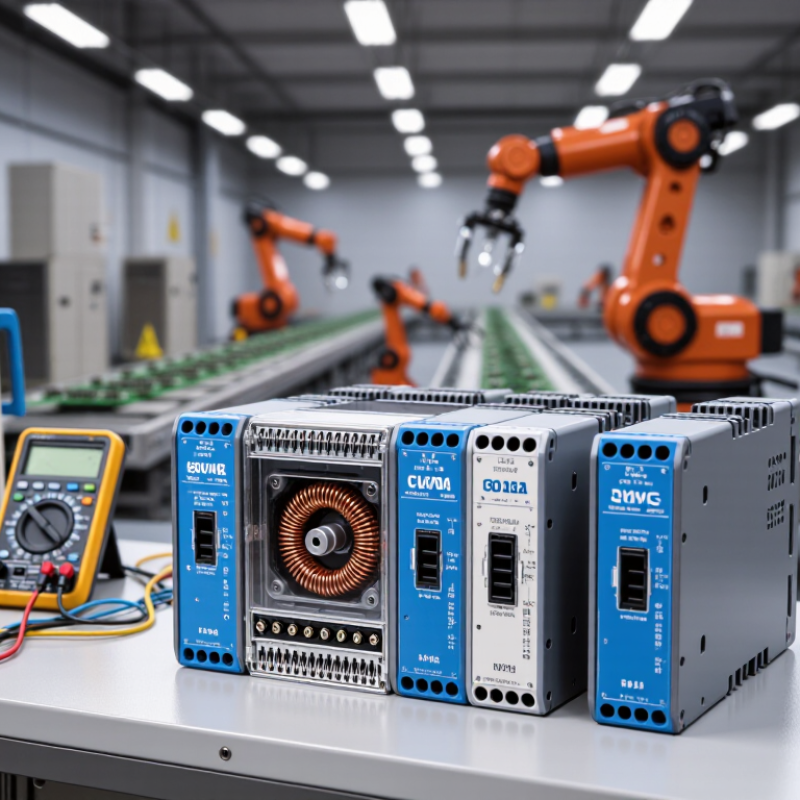
What Is a General Electric Relay and How Does It Work?
A general electric relay is an electrically operated switch. A small control signal energizes a coil, creating a magnetic field that moves an armature. The armature opens or closes contacts, allowing a separate circuit to carry a larger load. In a common normally open design, the contacts close when the coil is energized; a normally closed design opens them instead. That click is useful. It often signals movement, but it cannot confirm that the contacts are clean or working correctly.
Relays appear in control panels, pumps, heating equipment, and vehicle systems. Selection depends on coil voltage, contact rating, switching frequency, and the load type. For example, an inductive motor load can produce an arc as contacts separate, so the relay must be rated for that duty. Grand View Research’s 2023 relay-market report estimated a global market value of USD 9.28 billion in 2022 and projected 6.8% annual growth from 2023 to 2030. That estimate indicates broad demand, but it does not describe every relay type or application. Check the manufacturer’s datasheet, wiring diagram, and operating conditions before installation; heat, vibration, and frequent switching can shorten service life. A relay can look simple. Its limits matter.
What Is a General Electric Relay and How Does It Work?
A relay is an electrically operated switch. When voltage energizes its coil, the resulting magnetic field moves an armature and changes the contact state. This illustrative 24 V DC cycle shows a normally open contact closing after the coil is energized and opening after it is de-energized. Switching delays vary by relay design and operating conditions.
Why China Is a Major Supplier of General Electric Relays
China is a major supplier of general electric relays because its manufacturing ecosystem is unusually complete. UNIDO’s International Yearbook of Industrial Statistics places China’s share of global manufacturing value added above 30%. That scale supports local production of copper contacts, molded housings, coils, springs, and testing equipment. Suppliers can source many parts within one industrial region. Delivery becomes faster, although not always predictable.
Demand is also expanding across transportation, factory automation, renewable energy, and building controls. The International Energy Agency reported that global electric car sales exceeded 14 million in 2023, with China representing more than half of those sales. Electric vehicles require compact relays for battery protection, charging systems, thermal control, and power distribution. A 2024 relay market assessment by MarketsandMarkets also forecasts steady global growth through the decade, supported by automation and electrification.
Production cost remains another advantage. Large factories spread tooling, inspection, and certification expenses across high volumes. Experienced engineers can customize contact materials, coil voltage, switching capacity, and mounting styles. I have found that sample response is often quick, but consistency needs closer checking. Some factories still show uneven documentation or weak traceability between batches. Buyers should review test reports, endurance data, insulation performance, and change-control procedures before placing volume orders. China’s strength is real, but supplier quality is not uniform.
Leading Chinese General Electric Relay Suppliers by Product Type
China’s general electric relay suppliers are best compared by product type, not by catalog size. Electromechanical relays suit control panels, pumps, and industrial machines. Solid-state relays offer quiet switching and longer cycle life, but they need careful heat management. Power relays handle heavier loads, while signal relays support low-current automation and communication equipment.
According to Fortune Business Insights, the global relay market was valued at about USD 9.35 billion in 2023 and may reach USD 14.84 billion by 2032. This growth supports China’s broad supplier base across manufacturing, testing, and export services. Suppliers producing automotive relays often emphasize vibration resistance and compact housing. Protection-relay manufacturers focus more on response time, insulation, and compliance with IEC 60255. In practice, product categories can overlap. That makes comparison less simple than a spreadsheet suggests.
Tips: Request test reports, coil-voltage samples, contact-load data, and operating-temperature results. Check whether ratings cover resistive or inductive loads. IEC 61810 is useful for relay performance references. A lower quotation may conceal weaker contact materials, limited inspection, or inconsistent batch quality. I would also inspect five to ten samples, not one. Supplier claims are helpful, but field evidence matters more.
Key Factors for Evaluating Chinese Relay Manufacturers
Choosing a Chinese relay manufacturer requires more than comparing unit prices. Start with the application: coil voltage, contact load, switching frequency, ambient temperature, and expected service life. Ask for test records covering dielectric strength, contact resistance, temperature rise, and endurance. Request the test conditions, not only a pass mark. A relay tested at room temperature may behave differently inside a hot, crowded control cabinet. Check whether the supplier’s quality system is independently certified and whether production tests are traceable to specific batches.
Capacity matters.
The International Energy Agency’s 2023 report, Electricity Grids and Secure Energy Transitions, says annual grid investment must exceed USD 600 billion by 2030 to meet stated climate and energy goals. That expansion raises the need for dependable switching components, but it does not guarantee every supplier can maintain consistent quality at scale. Ask about production capacity, component sourcing, change control, and corrective-action records. Then compare samples with production units. Small differences matter. A sample can look excellent, while batch documentation remains incomplete; that deserves a closer review. No checklist catches everything. Combine document review with independent testing and a clearly defined pilot order.