
Enameled Copper Wire is a small component with a major influence on motor, transformer, generator, and automotive performance. Its thin insulation must survive heat, voltage stress, bending, and repeated production cycles. A weak coating may crack during winding. The failure can remain invisible until the equipment operates under load.
This guide examines China’s top 10 Enameled Copper Wire manufacturers through practical criteria, including conductor consistency, insulation systems, thermal classes, production capacity, testing methods, and export experience. It also considers certifications, traceability, technical support, and the manufacturer’s ability to customize wire dimensions. These details matter more than impressive factory photographs.
Professor Thomas A. Lipo, a respected electrical-machines expert, has emphasized: “The winding is the heart of the electric machine.” That observation explains why wire selection deserves careful attention. Copper purity, enamel adhesion, flexibility, and heat resistance can affect efficiency and service life. Small differences matter.
Still, no ranking is perfect.
A supplier may perform strongly in high-volume motor wire but lack experience with rectangular conductors or fine-gauge products. Another may offer competitive pricing while providing limited documentation. Buyers should verify test reports, insulation standards, delivery records, and sample performance before making a final decision. This article offers a research-based starting point, not a substitute for technical qualification. After all, the best Enameled Copper Wire manufacturer is not always the largest one. It is the supplier that consistently matches the application, quality requirements, and long-term production expectations.
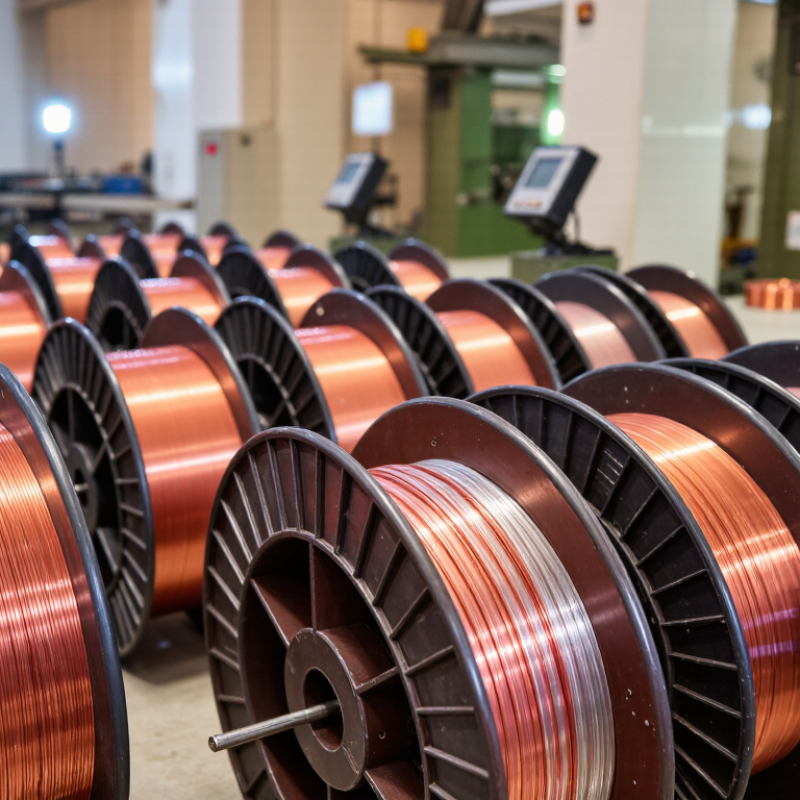
Enameled copper wire is a copper conductor covered by a thin polymer insulation film. It carries current inside motors, transformers, relays, generators, and charging equipment. Unlike plastic-jacketed cable, it fits tightly into winding slots. That small difference increases power density. Heat class matters. Common systems are rated near 155°C, 180°C, or 200°C, depending on insulation chemistry and testing. IEC 60317 specifications help buyers compare coating, dimensions, and electrical performance. Yet certificates cannot reveal every manufacturing weakness.
The International Copper Study Group’s 2024 outlook places global refined copper use above 26 million tonnes in 2025. The International Energy Agency’s 2024 outlook estimates clean-energy copper demand at about 6.7 million tonnes in 2023. It could reach 10.9 million tonnes by 2035 under stated policies. More motors and transformers mean more winding wire, but demand is not the only issue. Manufacturers must control pinholes, uneven coating, elongation, and conductor resistance. A tiny insulation defect can create a short circuit after repeated heating.
For a reliable top-ten manufacturer assessment, buyers should examine thermal aging results, breakdown-voltage records, diameter tolerances, and traceability. Production experience also matters during high-speed winding, where brittle enamel may crack around sharp bends. Forecasts are not destiny. I would treat them as direction, not proof. Copper prices, recycling rates, and regional electricity demand can quickly change the market. Practical audits still matter more than attractive capacity figures.
China’s leading enameled copper wire manufacturers should be ranked by evidence, not production claims. A strong evaluation begins with manufacturing experience and technical capability. Review wire diameter ranges, enamel types, thermal ratings, and conductor quality. Factory visits can reveal winding conditions, testing equipment, and storage discipline. Photos help, but direct observation is better. No ranking is perfect.
Quality control deserves serious weight. Check incoming copper inspection, coating thickness tests, pinhole detection, elongation results, and voltage breakdown records. Reliable manufacturers should provide traceable batch documents and consistent test reports. Certifications may support credibility, but they should match the actual products and facilities. Ask how the company handles defects, rework, and customer complaints. The answer often matters more than a certificate.
Tips: Compare recent samples under the same test conditions. Request production records, delivery performance, and references from comparable applications. Assess customization carefully, including spool size, insulation grade, and tolerance control. A low price may reflect efficiency, or a hidden compromise. I would also reduce points for vague answers, even when the factory looks impressive. The best selection balances proven experience, measurable quality, responsive service, and realistic delivery promises.
| Rank | Selection Dimension | Weight | Key Evaluation Indicators | Recognized Reference or Benchmark | Evidence Required from Manufacturers |
|---|---|---|---|---|---|
| 1 | Electrical Performance | 18% | Conductor resistance, dielectric breakdown voltage, insulation resistance, and electrical stability. | IEC 60317 product requirements; ASTM B33 where applicable. | Recent test reports, inspection records, and documented test methods. |
| 2 | Dimensional Accuracy | 12% | Conductor diameter, insulation thickness, ovality, finished-wire diameter, and dimensional consistency. | Applicable IEC 60317 grade and customer-approved dimensional tolerances. | Calibration certificates, gauge records, process capability data, and sample measurements. |
| 3 | Thermal Performance | 12% | Thermal class, temperature index, heat-shock resistance, softening behavior, and thermal aging performance. | IEC 60317 thermal-class specifications and applicable IEC test methods. | Thermal aging results, heat-shock test reports, and insulation-system qualification records. |
| 4 | Insulation and Mechanical Durability | 12% | Abrasion resistance, flexibility, elongation, adhesion, scrape resistance, and pinhole control. | Relevant IEC 60317 mechanical and insulation test requirements. | Routine test data, failure-rate records, and documented production-control procedures. |
| 5 | Raw-Material Control | 10% | Copper purity, incoming-material inspection, traceability, coating-material control, and supplier qualification. | Applicable copper-conductor specifications and controlled supplier-management procedures. | Material certificates, batch traceability, incoming inspection records, and approved-supplier lists. |
| 6 | Quality Management System | 10% | Process control, corrective action, internal audits, nonconformance management, and continuous improvement. | ISO 9001 quality-management principles; IATF 16949 where automotive supply applies. | Valid certificates, audit summaries, CAPA records, and quality-performance data. |
| 7 | Production Capacity and Delivery Reliability | 10% | Monthly output capability, equipment availability, lead time, on-time delivery, and contingency planning. | Verified production records and mutually agreed delivery-performance targets. | Capacity statements, delivery history, production schedules, and business-continuity plans. |
| 8 | Product Range and Customization | 6% | Available conductor sizes, insulation types, thermal classes, bonding options, and special winding requirements. | IEC 60317 product families and application-specific customer specifications. | Technical catalogues, sample approvals, product drawings, and engineering change records. |
| 9 | Environmental and Regulatory Compliance | 5% | Restricted substances, chemical declarations, waste control, energy management, and environmental documentation. | RoHS Directive 2011/65/EU and REACH Regulation (EC) No 1907/2006, where applicable. | Declarations of conformity, material declarations, laboratory reports, and environmental permits. |
| 10 | Technical Support and Total Cost | 5% | Engineering response time, application support, packaging quality, warranty handling, and total delivered cost. | Documented service-level agreements, quotation terms, and customer-specific technical requirements. | Technical response records, packaging specifications, warranty terms, and landed-cost calculations. |
| Total Evaluation Weight | 100% | Manufacturers should be ranked only after document review, sample testing, and supplier-audit verification. | |||
Scoring principle: assign each dimension a score from 0 to 10, multiply the score by its assigned weight, and compare the resulting weighted totals. Standards and regulations should be checked against the latest applicable edition and the destination market.
Profiles of China’s Top 10 Enameled Copper Wire Manufacturers
China’s leading enameled copper wire manufacturers serve motor, transformer, appliance, and electric vehicle applications. Their profiles differ in scale, coating chemistry, and process control. A 2024 Research and Markets report forecasts the global magnet wire market to expand at about 5% annually through 2030. This growth increases pressure on Chinese producers to improve consistency, not only volume.
The top ten profiles should be judged through measurable capabilities. Several manufacturers focus on fine wire for compact motors, while others produce rectangular wire for traction motors and transformers. Key indicators include diameter tolerance, pinhole frequency, elongation, thermal class, and breakdown voltage. IEC 60317 remains a common reference for enamelled wire requirements. Many plants also test against customer-specific automotive and energy standards. That sounds technical. It is also practical.
Production experience matters when enamel thickness changes by only a few microns. Modern lines may use online diameter gauges, controlled curing ovens, and laboratory aging tests. The China Wire and Cable Industry Association has reported China’s cable industry output above 60 million tonnes in recent years, showing the country’s manufacturing depth. Yet output alone proves little. A supplier with strong documentation, stable copper sourcing, and traceable batch records may be safer than a larger factory. Some public profiles still provide limited defect-rate data. That gap deserves scrutiny.
China Top 10 Enameled Copper Wire Manufacturers
China’s leading enameled copper wire manufacturers differ in product range, testing depth, and output flexibility. Common products include round, rectangular, solderable, self-bonding, and high-temperature wires. IEC 60317 defines many international wire requirements, while GB/T 6109 supports China-specific product verification. NEMA MW 1000 is also used for North American applications. Buyers should check conductor diameter, insulation build, thermal class, elongation, and breakdown voltage.
Production capability matters more than catalog size. Modern factories use multi-stage drawing, continuous enameling, infrared curing, laser diameter measurement, and online spark testing. Rectangular wire production requires precise corner control. Motor and transformer customers often request temperature classes from 155 to 220. According to the China Association of Automobile Manufacturers, China produced about 12.89 million new-energy vehicles in 2024. This growth increases demand for compact, heat-resistant magnet wire in traction motors and charging equipment.
Quality evidence must be measurable. Audit records should include winding tests, thermal aging, pinhole counts, adhesion results, and batch traceability. Reports from the International Energy Agency also show rapid global electric-vehicle expansion, strengthening this demand. Still, capacity claims can be misleading. Installed lines do not always equal stable output. A smaller supplier may deliver better consistency. That requires careful sampling, factory audits, and repeat testing before approval.
Reference view of commonly specified insulation thermal classes for enameled copper wire manufactured in China. The chart uses standardized temperature ratings and does not rank or disclose individual companies or brands.
Higher thermal classes are commonly selected for motors, transformers, generators, automotive components, and other applications requiring improved heat resistance. Product compliance is typically evaluated against IEC 60317, GB/T 6109, and applicable NEMA MW specifications.
China Top 10 Enameled Copper Wire Manufacturers
Comparing Chinese enameled copper wire suppliers requires more than checking price lists. Request conductor diameter tolerance, enamel thickness, thermal class, elongation, and dielectric breakdown data. A reliable factory should provide recent test reports, batch numbers, and clear production records. Ask for samples from regular production, not specially prepared coils.
Applications change the selection. Motor windings may need abrasion resistance and strong solderability. Transformer manufacturers often focus on dimensional stability, insulation performance, and heat endurance. Automotive components require tighter consistency under vibration and temperature changes. Check the wire against recognized standards, such as IEC or NEMA requirements. Also inspect the spool. Uneven winding can slow automated production.
Global supply needs deserve equal attention. Compare minimum order quantities, lead times, packaging methods, and export documentation. Confirm whether the supplier can maintain copper quality during price fluctuations. Ask about backup equipment and raw material planning. A factory may offer an attractive sample but struggle with monthly volume. That happens.
Independent laboratory testing can expose small defects, including pinholes or unstable enamel adhesion. During an audit, examine cleaning systems, temperature controls, and operator records. Do not rely only on polished videos. One weakness in my own comparison approach is overvaluing fast replies. Communication matters, but controlled production matters more. A slower supplier with traceable data may create fewer problems after shipment.
Contact Us