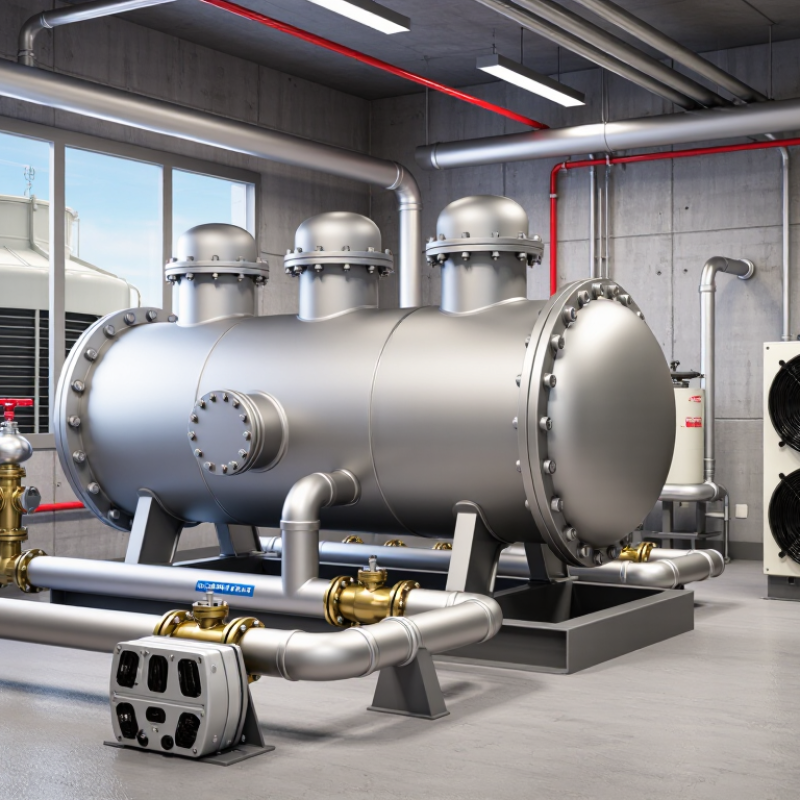
| Condenser Type | Shell-and-tube | Provides robust construction, good serviceability, and tolerance for larger refrigerant charges. | Suitable for commercial refrigeration, industrial chillers, and systems requiring mechanical tube cleaning. |
| Condenser Type | Brazed-plate heat exchanger | Offers a compact footprint and high heat-transfer efficiency because of its corrugated plates and turbulence. | Best where space is limited and the water quality is clean and well controlled. |
| Condenser Type | Gasketed-plate heat exchanger | Allows opening, inspection, cleaning, and capacity modification by adding or removing plates. | A practical choice for facilities with regular maintenance access and variable operating loads. |
| Condenser Type | Tube-in-tube or coaxial | Has a simple flow path and can perform reliably in smaller systems. | Often used for compact refrigeration units, heat pumps, and smaller water-cooled equipment. |
| Required Heat-Rejection Capacity | Select for the calculated design heat load, not only the evaporator or cooling load. | A condenser must reject both the useful evaporator load and the compressor input power. | Use the manufacturer’s rating at the actual refrigerant, condensing temperature, water temperature, and flow rate. |
| Condensing Temperature | Common design range: approximately 35–50°C condensing temperature, depending on the system. | Lower condensing temperature generally reduces compressor power and improves efficiency. | Confirm that the selected condenser can maintain the required temperature during the highest entering-water temperature. |
| Cooling-Water Inlet Temperature | Typically about 20–32°C for many comfort-cooling and industrial water systems. | The entering-water temperature directly affects condensing pressure and available heat-transfer capacity. | Use the site’s maximum seasonal water temperature for selection and performance verification. |
| Water Temperature Rise | Common design range: approximately 3–8 K across the condenser. | A higher water temperature rise reduces water flow but can increase the required heat-transfer surface. | The final value should match the cooling tower, chilled-water plant, or process-water design. |
| Water Flow Rate | Calculate from heat rejection, water specific heat, water density, and permitted temperature rise. | Insufficient flow reduces heat transfer; excessive flow increases pump energy and erosion risk. | Verify the available pump capacity and the condenser’s minimum and maximum flow limits. |
| Water-Side Pressure Drop | A practical preliminary target is approximately 20–70 kPa, subject to the system design. | Pressure drop determines pump power and affects the required pipe and control-valve sizing. | Compare the condenser pressure drop with the available differential pressure at design flow. |
| Water Quality | Clean, filtered, chemically controlled water is preferred. | Scale, corrosion, suspended solids, and biological growth reduce heat transfer and may block passages. | For open-loop or poor-quality water, consider filtration, water treatment, sacrificial protection, or an intermediate loop. |
| Fouling Allowance | Include a fouling allowance based on water chemistry, operating hours, and maintenance practice. | Fouling adds thermal resistance and gradually increases condensing pressure. | Do not rely on a generic allowance when the water contains high hardness, chlorides, or suspended solids. |
| Refrigerant Compatibility | Select materials, pressure ratings, and seals specifically for the refrigerant and oil combination. | Different refrigerants operate at different pressures and may require different material or safety specifications. | Check design pressure, test pressure, temperature limits, and applicable safety requirements. |
| Materials of Construction | Common choices include copper alloys, stainless steel, carbon steel, and titanium, depending on the fluid. | Material selection affects corrosion resistance, service life, cost, and compatibility with water treatment. | Consider chloride concentration, seawater exposure, galvanic corrosion, and cleaning chemicals. |
| Maintenance Requirement | Choose cleanable designs where water quality is uncertain or service access is important. | Regular inspection and cleaning preserve heat-transfer performance and reduce operating costs. | Shell-and-tube and gasketed-plate designs generally provide easier physical access than sealed compact units. |
| Space and Installation | Use a compact plate design where footprint is critical; use a shell-and-tube design where access and durability are priorities. | The condenser must fit the plant layout while allowing clearance for piping, inspection, and replacement. | Confirm connection orientation, service clearance, mounting method, vibration control, and transport limitations. |