

Blog
How to Choose China Best Faux Stone Panels Supplier?
Choosing China’s best Faux Stone Panels supplier requires more than comparing prices or browsing polished product photos. The artificial stone market is expanding steadily. Grand View Research estimated its global value at approximately USD 22.24 billion in 2023. The report also projects a 5.4% compound annual growth rate from 2024 to 2030. These figures suggest opportunity, but they also invite inconsistent quality.
The right supplier should prove performance with documents. Ask for material specifications, fire-test results, UV-resistance data, water-absorption figures, and freeze-thaw testing. Confirm whether panels are polyurethane, PVC, resin, or cement-based. Each material behaves differently behind a sunny exterior wall. A reliable factory should provide batch records, installation manuals, packaging details, and a written warranty. Factory photos are not enough.
Building-science expert Joseph Lstiburek has repeatedly emphasized a simple principle: “Water is the enemy.” That warning matters for Faux Stone Panels. Poor drainage, weak joints, and missing flashing can damage a beautiful installation. Look for suppliers who understand the complete wall system, not only the decorative surface. Request physical samples. Compare color depth, edge finishing, texture repetition, and panel flexibility under ordinary handling.
The lowest quotation may be the most expensive mistake. I have seen attractive samples conceal thin backing and uncertain accessories. That possibility deserves attention. Check independent certifications, production capacity, export experience, and customer references before placing a deposit. Also verify whether the quoted price includes corner pieces, trims, adhesives, fasteners, and replacement panels. A strong supplier is not merely a manufacturer. It is a technical partner with traceable evidence.
What Are Faux Stone Panels and Why Choose a China Supplier?
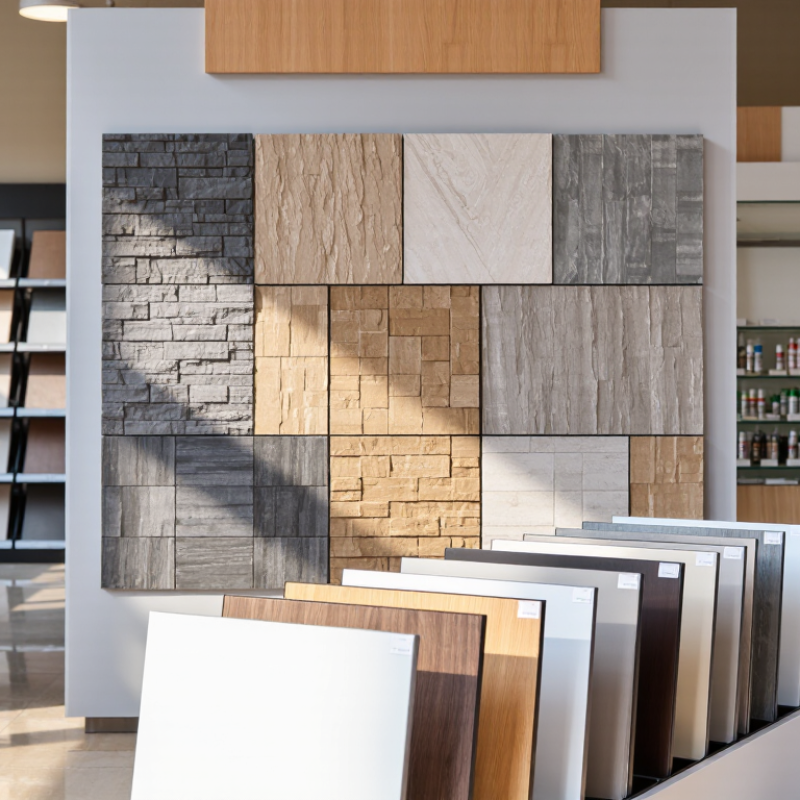
Faux stone panels are lightweight wall cladding made from materials such as polyurethane, resin, cement, or recycled aggregates. They imitate slate, brick, or natural rock without the same structural weight. Their quick installation also reduces handling time on renovation projects. However, panel quality varies widely.
Fortune Business Insights valued the global artificial stone market at about USD 19.77 billion in 2023. It expects the market to reach roughly USD 31.64 billion by 2032. These figures combine several artificial-stone categories, so panel-specific estimates remain imperfect. That limitation matters. China is attractive because its manufacturing network supports custom molds, color matching, packaging, and large-volume production. A capable supplier can also adjust thickness, texture, and interlocking edges for a project. Do not assume every factory offers the same control.
Tips: Request a physical sample before discussing a full order. Check surface realism under daylight. Measure panel thickness and corner accuracy. Ask for water-absorption, fire-performance, and impact-test documents from an independent laboratory. Inspect one opened carton for scratches, broken edges, and weak packaging. The International Organization for Standardization emphasizes documented quality systems, but certification alone cannot replace product inspection. A low quote can still become expensive through waste, replacement panels, and delayed installation. In my view, the best China supplier is not always the cheapest; it is the one that explains limitations clearly.
How to Choose China Best Faux Stone Panels Supplier? - What Are Faux Stone Panels and Why Choose a China Supplier?
| Evaluation Dimension | Recommended Benchmark or Typical Specification | Why It Matters When Choosing Faux Stone Panels | What to Request from a China Supplier |
|---|---|---|---|
| Panel Composition | Common products use polymer resin, cementitious material, polyurethane, or fiberglass-reinforced compounds. | The composition affects weight, impact resistance, moisture behavior, texture, installation method, and long-term durability. | Request the technical data sheet, material description, sample cross-section, and confirmation that the supplied material matches the approved sample. |
| Panel Thickness | Typical decorative faux stone panels are approximately 10–50 mm thick, depending on the construction and profile. | Thickness influences appearance, rigidity, fixing requirements, package volume, and freight cost. | Confirm nominal thickness, permitted tolerance, corner-piece dimensions, and whether the stated thickness includes the relief or only the backing. |
| Panel Weight | Many lightweight systems are designed to remain substantially lighter than natural stone; actual weight must be checked by product type and size. | Lower weight can reduce structural loading and make handling easier, but excessive lightness may indicate lower impact resistance for some constructions. | Ask for weight per panel and weight per square metre, measured from production samples rather than estimated from catalog images. |
| Water Absorption | A lower water-absorption value is generally preferred for exterior or humid applications; the acceptable limit depends on the material and applicable standard. | Moisture can affect staining, freeze-thaw performance, dimensional stability, coating life, and adhesive selection. | Request a laboratory test report stating the test method, sample condition, result, and date. Do not rely only on the phrase “waterproof.” |
| Freeze-Thaw Suitability | Exterior products in cold climates should have documented freeze-thaw or weathering performance appropriate for the project location. | Repeated freezing and thawing can cause cracking, delamination, surface scaling, or loss of bond when a product is not suitable. | Provide the target climate and request test evidence, installation limitations, and approved substrate and adhesive requirements. |
| Fire Performance | Fire classification depends on the panel composition, thickness, backing, adhesive, and installation assembly. ASTM E84 and EN 13501-1 are commonly referenced systems. | A panel’s fire result cannot be transferred automatically to every wall assembly or installation method. | Request a report for the exact product and configuration. Confirm the classification required by the destination building code before ordering. |
| UV and Weather Resistance | Exterior panels should use a weather-resistant color layer or coating and have documented accelerated-weathering or outdoor exposure results where required. | UV exposure may cause fading, chalking, embrittlement, or changes in surface texture over time. | Ask for coating details, color-control samples, cleaning instructions, and any accelerated-weathering test method and duration. |
| Dimensional Consistency | Panels should have consistent length, width, thickness, locking edges, and corner geometry within the supplier’s declared tolerance. | Inconsistent dimensions increase installation time, visible joints, material waste, and the need for site modification. | Measure several panels from a pre-production sample. Include dimensional tolerances and rejection criteria in the purchase order. |
| Surface Appearance | Texture, color variation, aggregate distribution, and joint design should be consistent with the approved reference sample. | Faux stone relies on realistic variation, but uncontrolled variation can create an uneven or visibly repetitive façade. | Approve a physical color board or production sample. Specify acceptable variation, texture direction, gloss level, and repair-color requirements. |
| Installation System | Possible methods include adhesive fixing, mechanical fastening, or a combined system, depending on panel weight, substrate, and application. | The correct installation method affects safety, wind resistance, moisture management, labor cost, and warranty validity. | Request installation drawings, recommended adhesive or fastener specifications, substrate preparation requirements, joint details, and maintenance guidance. |
| Quality Control | A reliable production process should include incoming-material inspection, in-process checks, final inspection, and batch traceability. | Documented quality control reduces variation between containers and provides evidence when defects or claims occur. | Ask for an inspection checklist, acceptable quality limit, batch coding method, defect photos, and a pre-shipment inspection procedure. |
| Testing and Compliance Documents | Documentation should match the exact model, material, thickness, finish, and intended application. | Generic or unrelated reports may not satisfy project consultants, customs authorities, or building-code requirements. | Verify report issuer, test standard, product identification, test date, sample description, and whether the report is transferable to the supplied configuration. |
| Sample Approval | Required before bulk production | Digital images cannot accurately show color, relief depth, texture, gloss, edge details, or panel stiffness. | Use a signed or documented approval sample and keep a retained reference sample for production and final inspection comparison. |
| Packaging Protection | Export packaging should protect corners, surfaces, edges, and decorative finishes from impact, moisture, and abrasion. | Many transit claims result from inadequate internal protection rather than manufacturing defects. | Confirm carton or crate design, moisture barrier, corner protection, pallet loading, maximum stacking height, and package drop or handling precautions. |
| Production Lead Time | For standard items, production may commonly require several weeks after sample and artwork approval; custom molds may require additional time. | Lead time affects construction schedules, inventory planning, seasonal shipping, and project penalties. | Obtain a written schedule covering sample approval, mold development, production, inspection, packing, and estimated shipping readiness. |
| Minimum Order Quantity | MOQ varies by panel design, finish, packaging, and whether a new mold or color is required. | A low MOQ may reduce inventory risk, while a higher MOQ may provide better pricing for standardized production. | Request separate MOQs for standard colors, custom colors, custom textures, replacement pieces, and mixed-container orders. |
| Customization Capability | Potential options include color, texture, panel size, corner pieces, trim, packaging, and private-label carton artwork. | Customization can improve project matching but may increase tooling fees, approval time, MOQ, and quality-control complexity. | Request mold charges, sample charges, ownership terms, revision limits, color-matching conditions, and the process for approving changes. |
| Commercial Transparency | A complete quotation should identify product specifications, quantity unit, packaging, tooling, inspection, delivery terms, and payment milestones. | Clear quotations make supplier comparisons meaningful and reduce unexpected charges after the order is placed. | Compare like-for-like quotations using the same Incoterm, currency, quantity, packaging standard, testing scope, and delivery destination. |
| After-Sales Support | The supplier should provide installation guidance, replacement-piece procedures, claim response times, and reasonable product warranty terms. | Panels may need replacement because of transit damage, site cutting, color variation, or installation errors. | Clarify warranty exclusions, evidence required for claims, response deadline, replacement policy, and availability of matching future batches. |
| China Sourcing Advantage | China has a broad manufacturing base for decorative building materials, tooling, packaging, and export logistics. | A wider supplier pool can support design variety, custom development, competitive production costs, and consolidated shipments. | Select based on verified samples, product-specific documents, factory-process evidence, communication quality, and inspection results—not price alone. |