

Blog
What Are the Best Flap Turnstile Gates from China?
Choosing the best Flap Turnstile Gates from China requires more than comparing prices and polished product photos. The right choice depends on access volume, installation space, security goals, and maintenance support. A busy office lobby needs different performance from a railway station or a private fitness club. Small details matter. Consider lane width, flap material, motor response, sensor accuracy, noise, and emergency release behavior. These features affect daily operation, not just the first impression.
Reliable manufacturers usually provide clear specifications, factory testing records, installation guidance, and responsive after-sales service. Buyers should examine enclosure materials, controller quality, waterproof ratings, and compatibility with card, biometric, QR, or visitor management systems. Ask for operating cycles and warranty conditions in writing. Request sample videos, inspection reports, and references from comparable projects. A confident supplier should explain limitations instead of promising everything. That honesty is useful.
No comparison is perfect. A low quotation may hide weak components, difficult software integration, or expensive replacement parts. A premium model may also be excessive for a low-traffic entrance. This guide evaluates Chinese Flap Turnstile Gates through practical criteria, including build quality, throughput, safety design, customization, delivery communication, and long-term service. It also considers whether suppliers can support applicable building, accessibility, electrical, and fire-safety requirements in the installation location. Readers should verify those requirements locally. The final decision should follow site testing and documented evidence, rather than marketing language alone. That approach may take longer, but it reduces unpleasant surprises after installation.
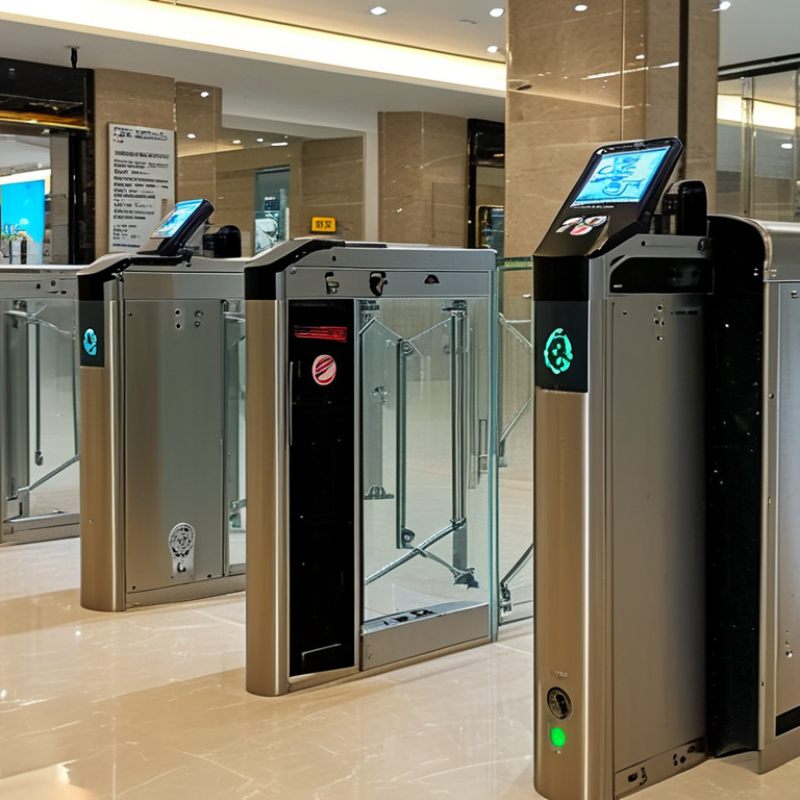
Chinese Flap Turnstiles: Types, Functions, and Key Industry Specifications
Chinese flap turnstiles come in standard, wide-lane, and accessible configurations. Each type suits a different movement pattern. Standard lanes fit offices, metro stations, and controlled entrances. Wide-lane models support luggage, wheelchairs, or supervised pedestrian flow. Some units use tempered glass wings, while others use acrylic or polycarbonate panels. The material affects visibility, impact resistance, and maintenance. In practice, a wider lane can improve access but reduce the number of gates per meter.
Functions usually include bidirectional passage, emergency unlocking, anti-tailgating detection, and audible status prompts. Reliable systems use infrared sensors across the passage area. Their controllers should connect with card readers, QR scanners, biometric terminals, or visitor systems. Key specifications include lane width, opening speed, throughput, input voltage, standby power, and operating temperature. Stainless steel construction, sealed electronics, and an IP rating are valuable in humid or dusty locations. Compliance should be checked against applicable regional requirements, such as EN 16005 or accessibility rules.
Installation details often decide performance more than the catalog. Uneven flooring can disturb sensor alignment. Poor cable routing can delay troubleshooting. Ask for tested cycle data, warranty terms, spare-parts availability, and factory inspection records. Check the drawings twice. A claimed throughput may not match real queues, especially when users carry bags. That is an easy mistake. My practical preference is a slower, clearly monitored gate when safety, accessibility, and stable daily operation matter more than impressive speed.
What Are the Best Flap Turnstile Gates from China? - Chinese Flap Turnstiles: Types, Functions, and Key Industry Specifications
| Specification Category | Typical Industry Data | Common Options | Selection Considerations |
|---|---|---|---|
| Product Type | Motorized flap barrier turnstile with retractable or swing-opening glass wings | Single-lane, multiple-lane, bi-directional, normally open, or normally closed | Choose the operating mode according to security level, evacuation requirements, and traffic direction. |
| Typical Cabinet Material | 304-grade stainless steel is widely used for indoor and sheltered outdoor installations | 316 stainless steel for improved corrosion resistance; powder-coated carbon steel for controlled indoor areas | Use 316 stainless steel in coastal, humid, or chemically exposed environments. |
| Flap Material | Tempered safety glass, commonly about 8–12 mm thick | Clear, tinted, laminated, illuminated, or customized glass panels | Tempered or laminated glass reduces injury risk if the panel is damaged. |
| Lane Width | Approximately 550–650 mm for standard pedestrian lanes | Wider accessible lanes of approximately 900–1,000 mm | A wider lane may be required for wheelchair users, luggage, carts, or emergency access. |
| Overall Height | Typically about 980–1,200 mm, depending on the cabinet design | Low-profile, standard-height, or custom architectural housings | Confirm the height together with surrounding barriers and the site’s visual design requirements. |
| Throughput | Usually up to approximately 25–35 persons per minute under controlled access conditions | Higher practical throughput with fast authentication and orderly pedestrian flow | Actual throughput depends on authentication time, user behavior, lane width, and anti-tailgating settings. |
| Opening and Closing Time | Commonly adjustable within approximately 0.3–1.0 seconds | Slow-close safety mode, standard speed, or high-speed operation | The final setting should balance traffic efficiency, motor life, and user safety. |
| Authentication Methods | Supports access-control inputs through standard relay or communication interfaces | RFID cards, QR codes, biometric readers, mobile credentials, facial recognition, and tickets | Verify compatibility with the existing access-control software and reader hardware. |
| Sensors | Multiple infrared photoelectric sensors for passage detection and anti-pinch protection | Additional sensors for anti-tailgating, reverse passage, object detection, and lane monitoring | Sensor layout and response logic should be tested with the intended pedestrian flow. |
| Safety Function | Automatic reopening or stopping when an obstruction is detected | Emergency release, manual release, audible alarm, visual indicators, and fire-alarm integration | The emergency mode must be coordinated with the building’s fire and life-safety plan. |
| Power Supply | Commonly 100–240 VAC input with low-voltage internal control circuits | Regional voltage configurations, backup battery, UPS connection, and surge protection | Confirm voltage, frequency, grounding, standby requirements, and local electrical regulations. |
| Rated Power Consumption | Often approximately 100–150 W per lane during operation; standby consumption is lower | Energy-saving standby mode and battery-supported operation | Request the exact standby and peak power figures for electrical-load planning. |
| Communication Interfaces | Dry-contact relay inputs are common for open, close, alarm, and emergency commands | RS-485, Wiegand, Ethernet, TCP/IP, USB, or third-party controller integration | Check protocol documentation, data security, cable distance, and software integration requirements. |
| Ingress Protection | Indoor models commonly provide basic environmental protection; outdoor ratings vary by enclosure design | Weatherproof housings, drainage design, sealed electronics, and higher IP-rated configurations | Do not assume outdoor suitability; verify the complete assembled system’s tested IP rating. |
| Operating Environment | Many systems are designed for approximately −20°C to +60°C, subject to the model | Heaters, cooling fans, humidity protection, and customized temperature ranges | Consider condensation, direct sunlight, dust, salt air, and installation altitude. |
| Noise Level | Typically designed for low-noise operation in offices and public buildings | Damped drive mechanisms, brushless motors, and soft-start/soft-stop control | Ask for measured noise data if the gate will be installed in libraries, hotels, or hospitals. |
| Reliability and Service Life | Commercial units are commonly specified for hundreds of thousands to more than one million operating cycles | Reinforced drive assemblies, modular control boards, and replaceable motor units | Require cycle-test conditions, maintenance intervals, spare-parts availability, and warranty terms. |
| Standards and Compliance | May be manufactured to applicable electrical, machinery, electromagnetic-compatibility, and access-control requirements | CE-related documentation, RoHS declarations, EMC test reports, and local certification packages | Certification requirements differ by destination country and project type; request verifiable documents. |
| Typical Applications | Office buildings, commercial complexes, airports, stations, universities, factories, and government facilities | Visitor management, employee attendance, ticket validation, membership control, and restricted-area access | Select the gate according to traffic volume, security policy, accessibility needs, and aesthetic requirements. |
| Best-Fit Evaluation Criteria | Safety, verified durability, system compatibility, environmental suitability, and total cost of ownership | Factory testing, customization, installation guidance, remote support, spare parts, and after-sales service | Compare complete technical proposals rather than purchase price alone. |
Note: The figures shown are typical industry ranges for Chinese-manufactured flap turnstiles. Exact specifications vary by configuration, installation environment, and project requirements.