2026 Top Tarpaulin Sheets for Buyers Which Type Is Best?
Choosing the right Tarpaulin Sheets in 2026 requires more than comparing prices and thicknesses. Buyers must consider fabric strength, coating quality, waterproof performance, edge construction, and expected working conditions. A sheet protecting construction materials from rain may need different features from one covering a boat, truck, greenhouse, or outdoor equipment.
Material choice matters. Polyethylene tarps are lightweight, affordable, and practical for general weather protection. PVC tarps usually offer greater durability, stronger abrasion resistance, and longer service in demanding environments. Canvas Tarps can provide breathability, although they may require more maintenance and careful drying. Even a thick tarp can fail if its grommets tear or its size leaves exposed gaps.
Small details matter.
This guide compares the leading Tarpaulin Sheets for different buyer needs, including temporary coverage, commercial transport, agriculture, camping, and long-term outdoor storage. It examines fabric weight, denier, waterproof ratings, UV resistance, reinforced hems, grommet spacing, and repairability. Real purchasing decisions often involve compromises. A heavier sheet may resist damage better, but it can be difficult to handle in strong winds. A cheaper option may seem efficient, yet replacement costs can rise quickly.
The recommendations are based on practical use factors and commonly accepted product evaluation methods. However, no single tarp suits every environment. Climate, installation, cleaning habits, and storage conditions can change performance significantly. Buyers should inspect specifications carefully and test a small quantity when possible. A trusted supplier should provide clear measurements, material details, care instructions, and consistent quality. The best choice is not always the thickest sheet. It is the one that fits the job honestly.
Tarpaulin Sheets: Definition, Purpose, and Main Uses
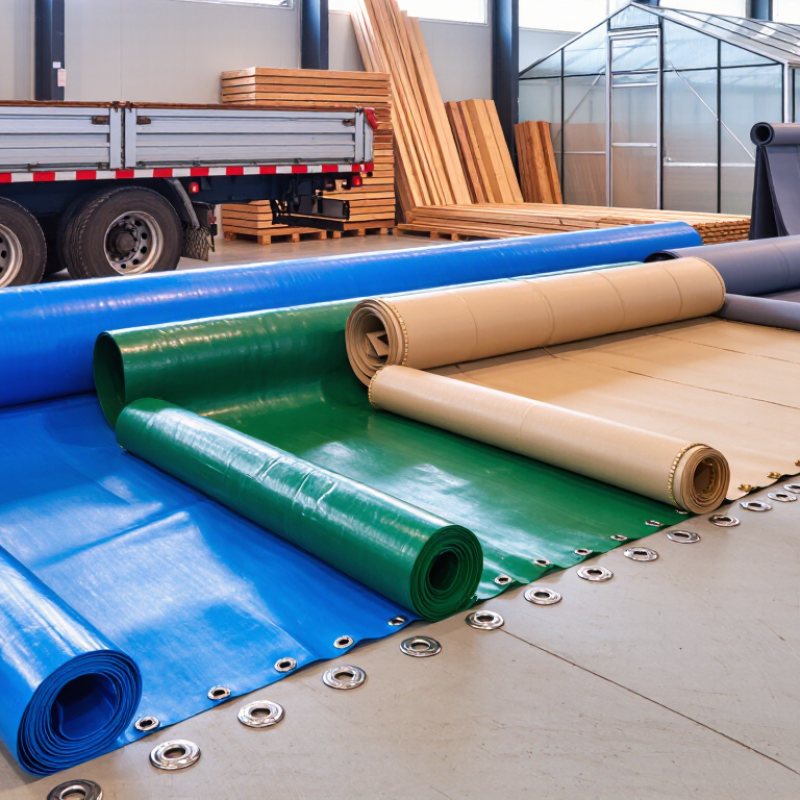
Tarpaulin sheets are flexible, coated fabrics designed to shield goods, equipment, and spaces from rain, dust, sunlight, and abrasion. Common constructions include woven polyethylene, PVC-coated polyester, canvas, and mesh. Each material behaves differently. Polyethylene is lightweight and economical, while PVC-coated polyester offers stronger tear resistance and longer outdoor service. Canvas feels breathable, but it may absorb moisture without suitable treatment.
Purpose determines the best type. A farmer covering hay usually needs a UV-stabilized, waterproof sheet with reinforced edges and rust-resistant eyelets. For machinery, a heavier PVC-coated sheet can reduce tearing around sharp corners. Mesh tarpaulins allow airflow and are useful for fencing or shade, but they cannot provide complete rain protection. The 2024 Mordor Intelligence tarpaulin market assessment projects continued market growth through 2029, supported by construction, transport, agriculture, and temporary storage demand. Its findings reinforce one practical point: purchasing decisions depend on use conditions, not thickness alone.
Specifications deserve careful checking. ASTM D751 testing can help assess coated-fabric strength, while ISO 4892-3 exposure methods support evaluation of weathering resistance. These tests do not guarantee identical field performance. Installation still matters. Loose sheets flap violently, and trapped water creates heavy stress. Industry reports often emphasize durability, but service life is also shaped by folding, cleaning, wind exposure, and storage temperature. I have seen buyers select the thickest sheet and still experience early failure at weak seams. The overlooked detail is often edge reinforcement.
Key Tarpaulin Materials and Their Performance Differences
2026 Top Tarpaulin Sheets for Buyers: Which Type Is Best?
Material choice controls a tarpaulin sheet’s strength, lifespan, and handling. Polyethylene tarpaulins are lightweight, affordable, and naturally resistant to water. They suit garden equipment, temporary covers, and transport protection. However, thin polyethylene can tear around sharp corners or under strong wind.
PVC-coated tarpaulins provide greater abrasion resistance and stronger waterproof performance. Their heavier structure works well for truck covers, machinery, and repeated outdoor use. They can feel stiff in cold weather. PVC may also become hot and less flexible under intense sunlight. Canvas tarpaulins offer better breathability, making them useful for agricultural goods and some storage applications. They feel durable, but untreated canvas absorbs moisture. Polypropylene sheets are light and practical, though their performance depends heavily on weaving density and surface coating. Specifications matter more than appearance.
Tips: Check GSM, coating thickness, seam quality, eyelet spacing, and UV resistance before buying. A 180 GSM sheet may work for short-term shelter, while heavier materials handle repeated exposure better. Test the sheet around corners, not only across its flat surface. I have seen strong fabric fail because weak eyelets carried the wind load. That detail is easy to overlook. Also, “waterproof” does not always mean permanent protection; damaged coatings and open seams can still allow water inside.
2026 Top Tarpaulin Sheets for Buyers: Which Type Is Best? – Key Tarpaulin Materials and Their Performance Differences
| Tarpaulin Type | Typical Material Structure | Water Resistance | UV Performance | Tear & Abrasion Resistance | Typical Weight | Expected Service Life* | Best-Fit Applications | Main Limitation |
| PE Woven Tarpaulin | Woven polyethylene fabric with laminated PE film layers | High | Moderate to high with UV treatment | Moderate | About 90–240 g/m² | 1–3 years outdoors | General covers, temporary shelters, landscaping, agriculture, and light cargo protection | Can become brittle or degrade faster under intense sun and repeated abrasion |
| PVC-Coated Polyester | Polyester scrim coated on one or both sides with polyvinyl chloride | Very high | High | Very high | About 300–900 g/m² | 5–15 years outdoors | Truck covers, industrial curtains, storage shelters, construction, and long-term outdoor use | Heavier, less breathable, and usually more expensive than PE tarpaulin |
| HDPE Woven Tarpaulin | High-density polyethylene tapes woven into a fabric, often laminated for water resistance | High | High with stabilizers | High | About 120–300 g/m² | 2–5 years outdoors | Agricultural covers, building materials, sand and wood piles, and reusable utility covers | A laminated surface may crack or delaminate after prolonged folding and weather exposure |
| Canvas Tarpaulin | Woven cotton, polyester, or cotton-polyester fabric with a water-repellent finish | Moderate to high | Moderate | High | About 280–600 g/m² | 3–8 years with proper care | Breathable covers, transport, workshops, military-style shelters, and applications needing reduced condensation | May absorb moisture, mildew if stored damp, and usually needs more maintenance |
| PVC Tarpaulin | Flexible PVC film or PVC-coated textile, commonly reinforced with polyester scrim | Very high | High | High | About 350–1,000 g/m² | 5–15 years outdoors | Waterproof partitions, heavy-duty covers, industrial storage, and vehicle applications | Heavier material with limited breathability; flexibility can decrease in cold conditions |
| LDPE Film Tarpaulin | Low-density polyethylene film, sometimes reinforced with a light woven layer | High when intact | Low to moderate | Low to moderate | About 40–150 g/m² | Several months to 2 years outdoors | Short-term dust covers, painting protection, temporary weather barriers, and disposable protection | Punctures and wind damage occur more easily than with woven or reinforced tarpaulins |
| Silicone-Coated Fabric | Woven polyester or nylon fabric impregnated or coated with silicone | High | High | High for its weight | About 40–200 g/m² | 3–10 years depending on exposure | Lightweight shelters, outdoor gear, camping covers, and applications where pack size matters | Can be slippery to handle and may be more difficult to repair or seam than PE fabric |
*Service-life note: Outdoor service life varies with fabric weight, coating quality, UV stabilizers, climate, installation tension, cleaning, and storage conditions. The ranges shown are practical estimates rather than guaranteed ratings.
Quick selection guide: Choose PE woven tarpaulin for economical general-purpose coverage, PVC-coated polyester for demanding long-term outdoor use, canvas where breathability is important, and silicone-coated fabric where low weight and compact storage are priorities.
Comparing Waterproof, Breathable, Heavy-Duty, and Lightweight Tarps
2026 Top Tarpaulin Sheets for Buyers Which Type Is Best?
Comparing Waterproof, Breathable, Heavy-Duty, and Lightweight Tarps
When buyers compare tarpaulin sheets in 2026, the material should match the job. Waterproof tarps suit rain protection, ground cover, and temporary roof shielding. A coated surface should shed water without collecting it near seams. Check grommet spacing, edge reinforcement, and fabric weight. Weak eyelets may fail first. I have seen that happen.
Breathable tarps use woven fabric that allows air and limited moisture vapor to pass. They work well over firewood, hay, or damp equipment needing ventilation. They are not dependable rain shelters. Water may enter through the weave during long storms. This difference is easy to overlook. Breathability protects stored materials from trapped condensation, but it cannot replace waterproofing.
Heavy-duty tarps provide thicker fabric, stronger edges, and better resistance to abrasion. Choose them for construction materials, machinery, or repeated outdoor use. They are heavier to carry and harder to fold. Lightweight tarps are easier for camping, gardening, and short-term coverage. However, wind can lift them quickly if fastening points are sparse. My own selection mistake was choosing a light sheet for a rough, exposed site. It worked briefly. Then the corners stretched. Buyers should inspect denier, coating, tear strength, and temperature limits rather than trusting thickness alone. Product specifications can still be incomplete, so small-scale testing remains sensible.
2026 Top Tarpaulin Sheets for Buyers: Which Type Is Best?
Comparison of common tarpaulin categories by typical performance characteristics. Ratings use a 1–5 scale, where 5 indicates stronger performance for the listed attribute.
Waterproof tarps provide strong rain protection, breathable tarps reduce condensation and are suitable for agriculture or covering materials that need airflow, heavy-duty tarps offer the highest tear and abrasion resistance, while lightweight tarps are easier to carry and install. Actual performance depends on fabric weight, coating, seams, grommets, and manufacturing quality.
How to Choose Tarpaulin Size, Thickness, Coating, and Strength
Choosing a tarpaulin sheet starts with the job, not the advertised thickness. Measure the covered area and allow extra material for folds, hems, and tie-down points. A sheet that barely reaches the edges will lift in wind. For short-term indoor storage, a light polyethylene sheet may be enough. Outdoor covers usually need greater thickness, UV resistance, and reinforced edges.
Thickness affects durability, but it does not tell the whole story. Check the fabric’s weight, weave, and tear strength. A heavy sheet can still fail when weak eyelets pull through. Look for rust-resistant grommets, welded seams, and reinforced corners. I once chose a thick cover with poor edge construction, and it split after repeated tension. That mistake changed how I inspect samples.
Coating selection depends on exposure. Waterproof coatings suit rain protection, while UV-stabilized surfaces help reduce cracking under strong sunlight. For frequent handling, choose a flexible material that will not become brittle in cold weather. Ask for test data covering tensile strength, tear resistance, water penetration, and temperature performance. Also check the actual finished dimensions, because hems can reduce usable coverage. Do not rely on color as a quality signal. A pale sheet may remain cooler, but it is not automatically stronger. Allow room for uncertainty when comparing suppliers.