2026 Best Lightning Arrester Types for Global Buyers?
Choosing the right Lightning Arrester in 2026 requires more than comparing prices and discharge ratings. Global buyers face different grid voltages, fault levels, climates, installation practices, and certification requirements. A device suitable for a dry industrial substation may perform poorly near a humid coastline. That difference matters.
This guide examines the main arrester types available to international purchasers. It considers metal-oxide arresters, distribution arresters, station-class designs, polymer-housed units, porcelain-housed units, and line arresters. Each type has a practical role. Metal-oxide technology remains widely used because it responds quickly without spark gaps. Polymer housings can reduce weight and improve handling during installation. Porcelain may still suit demanding substations, where mechanical strength and established maintenance procedures are important.
Field experience shows that a datasheet never tells the complete story. Installation height, grounding resistance, conductor length, and repeated temporary overvoltage can change real performance. Small details count. A poorly bonded ground path can undermine an excellent arrester. Buyers should review IEC or IEEE test evidence, factory quality records, environmental ratings, and local approval requirements. Supplier traceability also deserves attention, especially when replacement units may be needed years later.
No buying guide is flawless. Product classifications can overlap, and manufacturers sometimes describe similar designs differently. Therefore, this overview encourages careful comparison rather than automatic selection. The best choice balances protection level, system duty, weather exposure, maintenance access, lifecycle cost, and verified manufacturer experience. Safety comes before convenience.
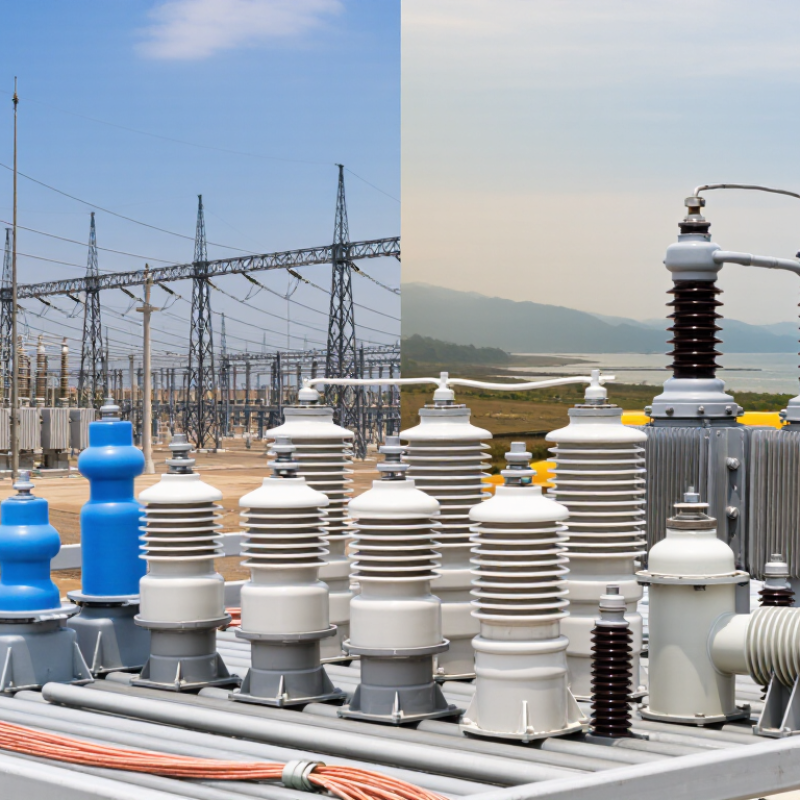
What Is a Lightning Arrester and How Does It Protect Electrical Systems?
What Is a Lightning Arrester and How Does It Protect Electrical Systems?
A lightning arrester limits dangerous voltage surges before they reach sensitive equipment. It is installed between energized conductors and the grounding system. During normal operation, it carries almost no current. When lightning or switching creates a surge, its internal voltage-sensitive elements become conductive. The surge then travels safely toward ground.
Modern metal-oxide arresters are widely used in distribution panels, transformers, solar installations, and industrial control cabinets. Their protective level must match the system voltage and insulation rating. An arrester that is too weak may fail during a severe event. One that is poorly selected may provide limited protection. That detail is easy to overlook.
Installation quality matters just as much. Short, straight connections reduce inductive voltage during a fast surge. A loose ground clamp, corroded cable, or sharp cable bend can weaken the protection. Field inspections often find damaged housings after storms, even when the arrester still appears normal. Visual checks are useful, but they cannot reveal every internal failure. Periodic testing and replacement planning improve reliability. No arrester is magic. It cannot stop every surge, protect equipment with poor insulation, or correct an unbalanced grounding system. Engineers should review local weather exposure, fault current, cable length, and maintenance conditions before choosing a type. Conditions change. The design should be reviewed too.
Which Lightning Arrester Types Are Available in 2026?
In 2026, global buyers can choose from several lightning arrester types, each designed for a different electrical environment. Metal-oxide arresters are the common choice for modern medium- and high-voltage systems. Their gapless design responds quickly to surge energy. Station-class units suit substations and large transformers. Distribution-class units protect feeders, poles, and smaller transformers.
Polymer-housed arresters are lightweight and resist moisture better in many outdoor installations. Porcelain-housed models remain useful where mechanical strength, proven insulation, or established maintenance practices matter. Line arresters can protect overhead conductors directly, especially in regions with frequent lightning and exposed routes. Low-voltage surge protective devices serve buildings, control panels, communication circuits, and sensitive equipment.
Selection should begin with system voltage, maximum continuous operating voltage, and expected temporary overvoltage. Check discharge current, residual voltage, energy capability, housing material, and short-circuit behavior. Pollution, altitude, humidity, salt exposure, and wildlife contact also affect performance. IEC and IEEE documents provide valuable testing and classification references, but local utility specifications still deserve attention. A neat datasheet can mislead. Field conditions are rarely neat. I have seen buyers focus on purchase price while overlooking lead length, grounding quality, or replacement access. The arrester may be excellent, yet the installation can still fail. Periodic inspection should look for cracked housings, loose connections, contamination, and heat damage. A practical choice balances protection level, service life, installation conditions, and verified test evidence.
How Do Voltage, Application, and Installation Needs Affect Selection?
2026 Best Lightning Arrester Types for Global Buyers?
How Do Voltage, Application, and Installation Needs Affect Selection?
The best lightning arrester depends on system voltage, grounding, and exposure conditions. Metal-oxide arresters are widely used because they respond quickly without series gaps. Yet nominal voltage alone is not enough. Check the maximum continuous operating voltage, temporary overvoltage, and required discharge-current rating. A poorly matched arrester may age during a routine grid fault. Do not guess.
Application changes the selection. A transformer entrance needs close protection with short, low-inductance connections. Overhead lines may require different energy handling and mechanical strength. Industrial facilities often face switching surges from motors, furnaces, or variable-speed drives. Substations need coordinated protection across incoming lines, transformers, and bus sections. Engineers should review pollution, altitude, rainfall, and local grounding resistance. Small details matter.
Installation quality can decide whether a suitable arrester performs well. Keep phase and earth leads straight, short, and firmly bonded. Follow the equipment maker’s clearance requirements and verify insulation coordination against IEC 60099-4 and applicable local standards. Inspect housings, terminals, and disconnectors before energizing. Field reviews often reveal an overlooked ground connection or excessive cable length. That lesson is uncomfortable but useful: selection calculations cannot repair careless installation. Global buyers should request test reports, environmental ratings, traceable documentation, and clear maintenance instructions before purchase.
What Standards and Technical Features Should Global Buyers Compare?
Global buyers should compare lightning arresters by standards, not by appearance or discharge-current numbers alone. IEC 60099-4 is widely used for metal-oxide arresters without gaps in medium- and high-voltage systems. IEEE C62.11 provides another important reference for metal-oxide surge arresters. Check the latest editions and confirm acceptance requirements in the installation country. Standards matter.
Technical comparison starts with continuous operating voltage, rated voltage, and temporary overvoltage capability. The arrester must tolerate normal system conditions without overheating. Compare nominal discharge current, residual voltage, energy-handling capability, and line discharge class. Lower residual voltage can improve equipment protection, but it may demand stronger thermal design. A useful data sheet should also show short-circuit behavior and ageing tests.
Outdoor projects require more than electrical ratings. Review creepage distance, pollution level, altitude, humidity, sealing, and ultraviolet resistance. Housing materials should resist cracking, tracking, and moisture entry. IEC 60099-5 can support selection and application decisions, while IEC 61643-11 is relevant to low-voltage surge protective devices. Do not mix these categories casually. Installation coordination also matters. Cable length can change protection performance. Field inspections often find poor grounding, loose connections, or inadequate separation, even when the arrester itself meets the standard. This is where specifications need honest review. A perfect datasheet cannot repair a weak earth path.
How Can Buyers Evaluate Suppliers, Costs, and Long-Term Reliability?
Global buyers evaluating lightning arresters should start with service conditions, not catalog labels. Identify system voltage, grounding method, altitude, pollution, wind, and expected lightning density. A supplier should request these details before quoting. That is a useful credibility test. Ask for routine and design test reports, material specifications, and traceable production records. Certificates alone can be too thin. Check whether reports show test standards, sample quantities, dates, and laboratory competence.
Compare total ownership cost, not only unit price. Include transport, spare arresters, inspection tools, installation hardware, and replacement labor. A low quote may hide weak sealing or inconsistent zinc-oxide blocks. Request a five-year failure estimate based on field data. Honest suppliers should explain data limits. They should also state warranty exclusions clearly, especially for contamination, shipping damage, or abnormal network events.
Long-term reliability needs practical evidence. Review leakage-current trends, thermal stability results, salt-fog performance, and water-ingress testing. Ask for serial-number tracking and a documented complaint process. Talk with operators who have used the same design through several storm seasons. Their maintenance logs may reveal more than polished presentations. I once underestimated packing quality, and moisture damage changed the apparent product risk. That mistake deserves attention. Compare two suppliers under identical technical conditions, and record every unresolved question.
2026 Best Lightning Arrester Types for Global Buyers?
How can buyers evaluate arrester types, technical capability, cost, and long-term reliability? The chart below shows the nominal discharge-current values associated with IEC 60099-4 line discharge classes.
How to use this benchmark: A higher IEC line discharge class generally indicates greater energy-handling capability, but it is not automatically the best choice. Buyers should verify continuous operating voltage (Uc), rated voltage (Ur), residual voltage (Up), system fault conditions, pollution level, enclosure requirements, test reports, warranty terms, and total lifecycle cost. The values shown are IEC reference levels and are not supplier or brand performance data.